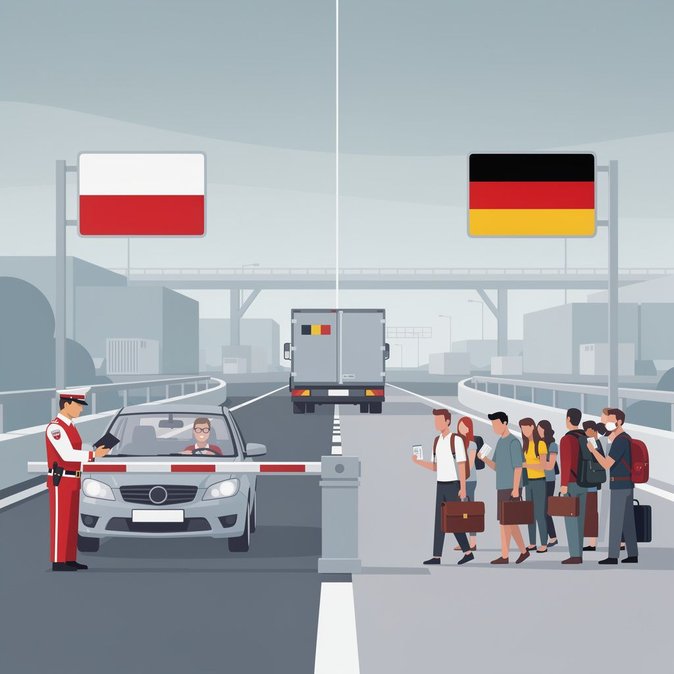
Poland has notified the European Commission that it will reintroduce controls at its land borders with Germany and Lithuania from 2 October 2026 to 30 March 2027, citing "persistent migratory pressure" and security concerns. The decision, published on the Commission’s Schengen tracking portal on 1 October, means travellers crossing the Oder–Neisse line should expect spot checks, possible queueing and proof-of-stay verifications. The move complicates logistics for thousands of cross-border commuters who live in Polish border towns but work in German states such as Brandenburg and Saxony. German rail operator Deutsche Bahn says it is coordinating with federal police on train inspections and warns that regional services may face delays of up to 15 minutes per stop if passport checks are conducted onboard. For freight, carriers report that similar controls in 2025 added up to two hours to Warsaw–Berlin truck runs. Supply-chain managers should revisit just-in-time delivery schedules for automotive and retail clients in eastern Germany. Affected industries are lobbying both governments to set up "green lanes" for accredited drivers and to recognise AEO (Authorised Economic Operator) cards to speed passage. Legally, Poland is exercising Article 25 of the Schengen Borders Code, which allows renewed checks for renewable six-month blocks. Germany, which already has its own internal checks in place until mid-March 2027, is unlikely to retaliate but will redeploy officers to match Polish controls and avoid gaps. Employers with posted workers or short-term assignees commuting across the border should ensure they carry residence permits and assignment letters. Immigration lawyers expect heightened scrutiny of Van der Elst arrangements and German minimum-wage compliance during the control period.