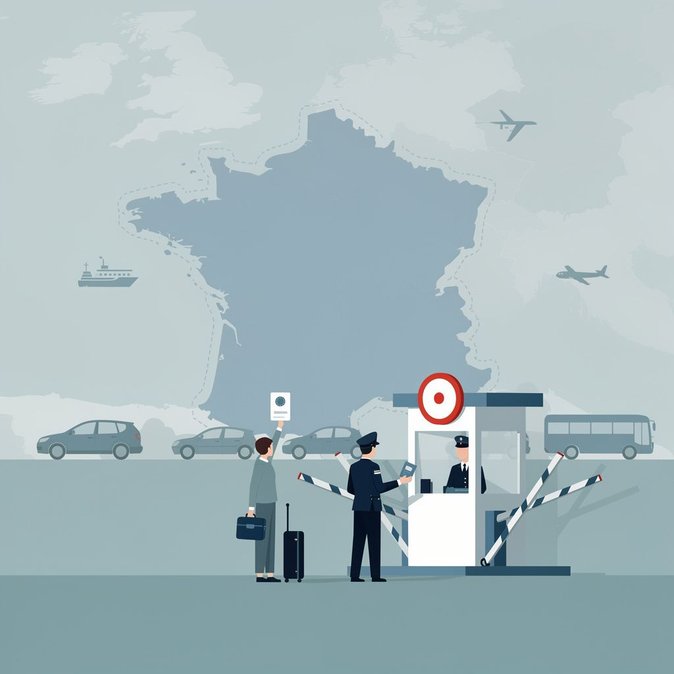
The European Commission’s Schengen border-control dashboard, updated on 4 October, lists France among the Member States that continue to apply temporary controls at internal borders. Paris first re-introduced the measure in 2015 and has renewed it every six months; the latest notification covers the period 1 May to 31 October 2026 and applies to land, sea and air borders, notably the Channel coast and crossings to the United Kingdom. According to the French Interior Ministry, the extension addresses “persistent jihadist threats, a rise in antisemitic attacks, and growing smuggling networks facilitating irregular migration”. Business travellers and assignees entering France from another Schengen country must therefore still expect passport checks—an exception to normal Schengen free movement rules. While queues are usually shorter than at external borders, peak-hour delays of up to 30 minutes have been reported at the Eurotunnel terminal in Coquelles and on Paris-Brussels Thalys services. Employers should brief staff that a valid travel document is mandatory even on intra-Schengen trips to France and should allow extra time for security screening at ferry ports, Eurostar hubs and certain regional airports such as Lille and Biarritz where spot checks are common. Holders of EU residence permits and frontier-worker (article 50 TUE) cards are advised to carry them, as officers may request proof of legal stay. Companies planning large meetings in France during October should monitor updates from the Interior Ministry in case the measure is prolonged again into November and beyond.