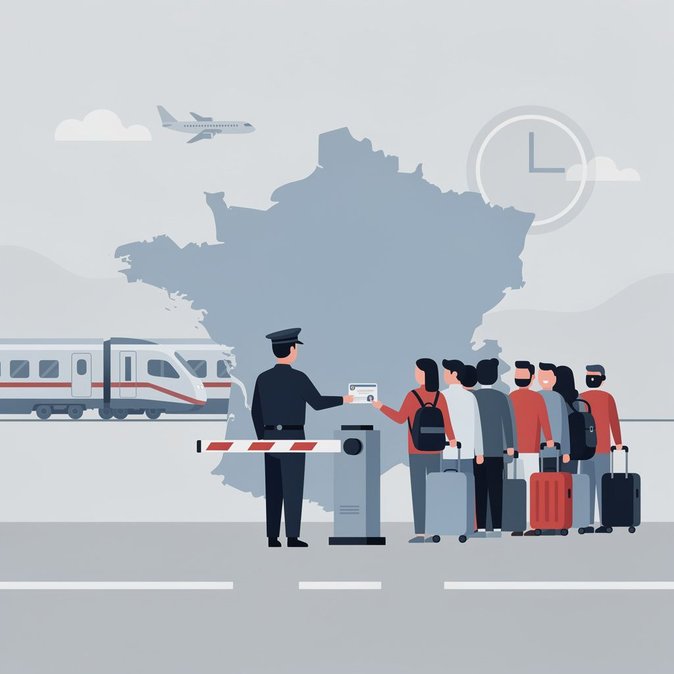
The European Commission’s daily update on temporary internal border controls, published on 4 October, reconfirms that France will keep checks at all of its land, sea and air borders until at least 31 October 2026. The measure—first introduced in May—cites a “persistent jihadist threat, rising antisemitic attacks and migrant-smuggling networks” as grounds for prolongation. In practice, travellers arriving from neighbouring Schengen states continue to face spot checks at major road crossings (especially on the A2 from Belgium and the A9 from Spain) and document screening aboard certain high-speed TGV Inoui and Thalys services. Airlines operating intra-Schengen flights into Paris-Orly and Lyon-St-Exupéry also report random ID verification at the gate. For corporate mobility planners, the impact is mostly on schedule padding. Door-to-door journeys that once relied on seamless Schengen movement now need an extra 20–30 minutes for possible inspections. Logistics firms moving critical spare parts across the Italian and German borders are advising drivers to carry printed contracts and proof of delivery deadlines to minimise delays. French authorities have hinted that controls could be extended a further six months under Article 25a of the Schengen Borders Code if risk levels remain high—something the travel industry fears would normalise friction within Europe’s largest free-movement zone. Until at least November, HR teams should remind travelling staff that a valid national ID or passport is mandatory even on domestic-type flights such as Marseille–Paris if they originate abroad, and that residency cards alone may not suffice.