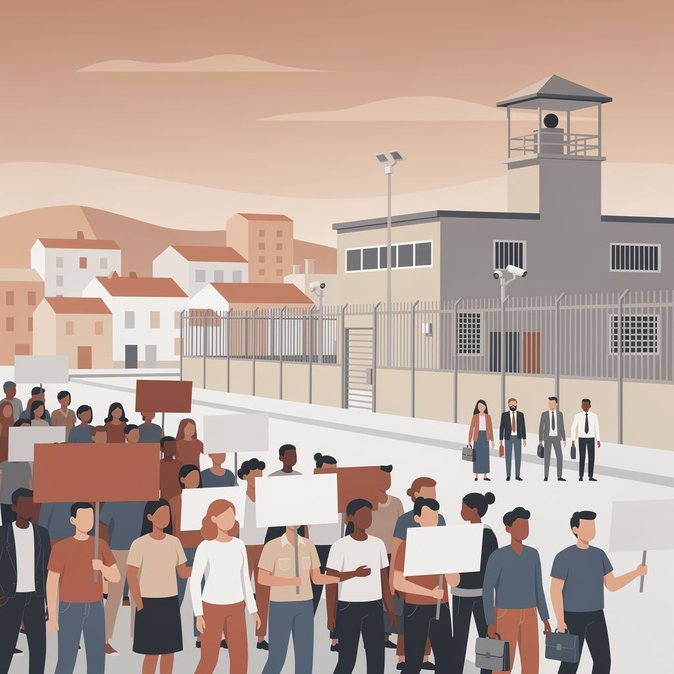
Between 300 and 400 demonstrators took to the streets of Montpellier on Sunday, 4 October 2026, to protest against the planned construction of a 140-bed immigration detention centre (centre de rétention administrative – CRA) in nearby Béziers. The rally was organised by a coalition of local NGOs, migrant-rights groups and trade-union branches that have spent the past year trying to halt the project. Protesters argue that France already has one of Europe’s largest detention networks and accuse the government of pursuing a “politics of confinement” rather than tackling the structural backlog in residence-permit processing and asylum claims. Speakers from La Cimade and other NGOs highlighted official figures showing France issues roughly 140,000 “obligations de quitter le territoire français” (OQTF) each year, yet fewer than one in eight deportations are actually carried out. “Building another CRA will not raise the removal rate, but it will increase human suffering and legal-aid costs,” one lawyer told the crowd. Local opposition is especially strong because Béziers already hosts a short-stay facility at the police commissariat; residents fear the new site will further stigmatise the town and draw police resources away from everyday policing. Environmental activists added their voice, noting that the earmarked plot was covered in wildflowers after last year’s symbolic “seed-bombing” action and that fencing has already gone up ahead of construction permits being granted. The Hérault prefecture issued an order earlier this year declaring the Béziers centre a project of “major public interest”, allowing expedited planning. Opponents have filed an administrative appeal arguing that the decree violates both zoning rules and EU directives on detention conditions. The case is expected to reach the Marseille administrative court by December. For global-mobility managers the episode is a reminder that France’s enforcement capacity—and the political temperature around migration—are escalating in the run-up to the 2027 presidential election. Companies moving non-EU staff into France should anticipate more frequent identity checks, longer airport-holding times and greater media scrutiny of corporate sponsorships for work permits, especially in Occitanie and Provence-Alpes-Côte-d’Azur.
Source: Le Poing