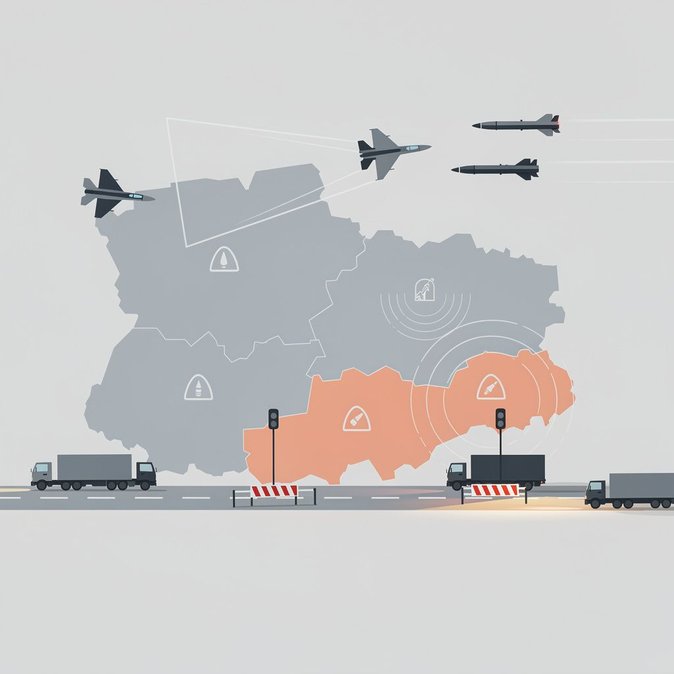
At 15:45 on Sunday, 4 October, Poland’s Government Security Centre (RCB) triggered its mass-SMS warning system after radar and allied intelligence indicated a new wave of Russian cruise-missile strikes heading for western Ukraine. Residents of the Lubelskie and Podkarpackie voivodeships – both bordering Ukraine – received the message: “UWAGA! Rosyjski atak powietrzny na terenie Ukrainy. Sytuacja jest monitorowana. W przestrzeni RP operuje polskie lotnictwo. Oczekuj dalszych komunikatów.” Although Polish airspace was not violated, the alert automatically activates civil-defence protocols: airports in Rzeszów and Lublin move arriving aircraft into quick-departure stands, regional rail operators slow trains, and local authorities open public-information channels in case shelter-in-place instructions follow. Warsaw’s operational concept, refined since the first large-scale strikes in 2022, aims to give the public a five-to-ten-minute lead time should falling debris drift over the border. For international mobility managers, the alert highlights why travel-risk assessments for staff posted in south-eastern Poland must now treat cross-border conflict as a dynamic hazard. Many multinational firms maintain logistics hubs near Rzeszów–Jasionka Airport, the main conduit for humanitarian and military aid to Ukraine. Companies contacted by the Polish-German Chamber of Commerce confirmed that non-essential travel was temporarily paused on Sunday evening until the “all-clear” was issued at 17:20. The RCB noted no casualties or property damage, but urged travellers to keep phones switched on and location services active so that geo-targeted alerts work correctly. The centre also reminded foreigners that the messages are bilingual if the handset language is set to English. Longer-term, the incident accelerates the Interior Ministry’s roll-out of a dedicated mobile-app complement to the SMS system, scheduled for nationwide testing later this month. Once live, the app will integrate push notifications with shelter maps – functionality of tangible value to expatriates unfamiliar with local siren patterns.
Source: Rządowe Centrum Bezpieczeństwa