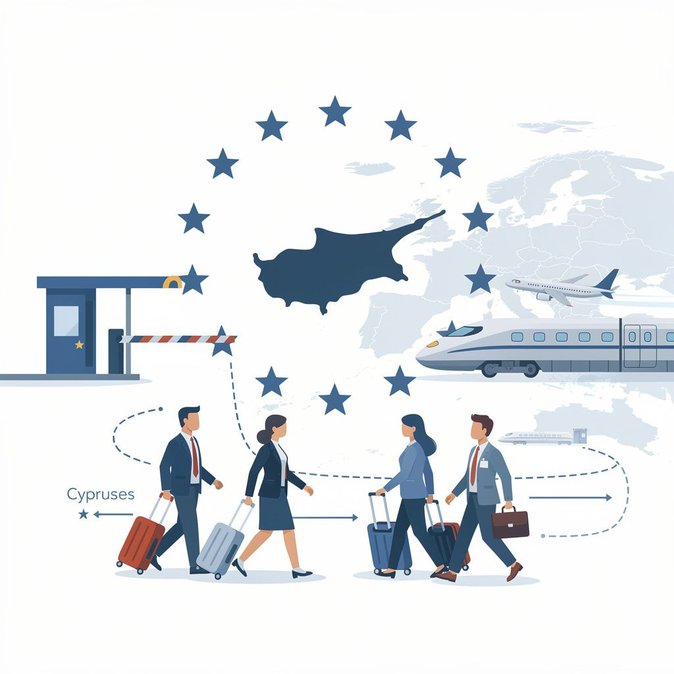
At yesterday’s MED9 summit in Split, Croatia, the prime ministers and presidents of the nine EU Mediterranean member-states endorsed Cyprus’ long-running effort to become part of Europe’s passport-free Schengen zone. The leaders ‘reiterated the importance of further strengthening the Schengen area, with a view to Cyprus’ accession,’ according to the joint declaration released after the meeting. They also ‘welcomed the positive outcome of the Commission’s Schengen country report on Cyprus and the start of discussions in the Council of the EU,’ signalling that only the political green light now remains. Behind the carefully drafted language lies a major step for business mobility. Although Cyprus applies the Schengen visa code at its consulates, its airports and seaports still run national border controls. Full membership would end routine passport checks for travellers arriving from the rest of the Schengen area, accelerating airport throughput and simplifying short-term postings for multinational companies that use Cyprus as a regional services hub. The timing is critical. Brussels’ new Entry/Exit System (EES) has been operational since April 2026, requiring sophisticated biometric infrastructure. Cyprus recently installed 40 automated border-control gates at Larnaca and Paphos airports to meet those technical benchmarks. Yesterday’s political endorsement shows that the investment is paying off and that Nicosia’s 2024–26 migration reforms—ranging from faster asylum procedures to an aggressive returns programme—have convinced partners of the island’s readiness. Still, the declaration hints at remaining hurdles: it notes that Cyprus’ participation will ‘strengthen the Schengen area’s collective capacity and security,’ a diplomatic reminder that some member-states want additional assurances on irregular migration routes through the eastern Mediterranean. Officials in Nicosia say they aim for a Council vote before the end of 2026, which, if successful, could see Schengen checks lifted for the summer 2027 season. For corporate mobility managers the message is clear: start planning now for simplified intra-EU travel to Cyprus, but keep contingency procedures in place until the Council delivers its final decision. Companies with rotation schedules for offshore energy projects or regional headquarters staff stand to gain the most from the eventual change.
Source: Cyprus Mail