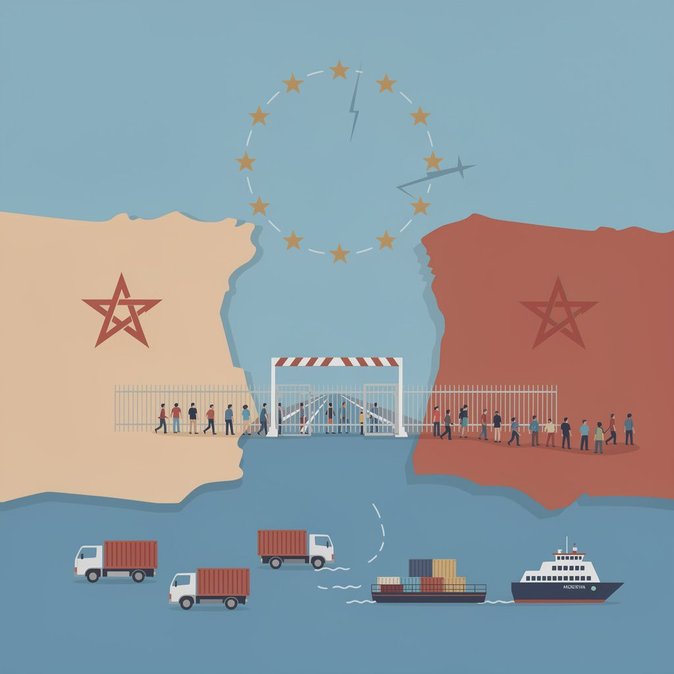
An in-depth report from digital daily Moncloa argues that Rabat deliberately loosened controls at the Tarajal crossing, allowing almost 80 000 people to enter Ceuta at the end of July as a form of geopolitical pressure. The article frames the move as a “pulse against Spain’s external image”, noting that every breach undermines Madrid’s standing in Brussels as a dependable gatekeeper of the EU’s southern frontier. Historically, Morocco has leveraged migration flows in negotiation cycles—from the 2021 incident triggered by Spain’s medical treatment of Polisario leader Brahim Ghali to this summer’s flare-up amid talks on fishing rights and EU aid. The sheer scale—equivalent to Ceuta’s entire population—exposed vulnerabilities in Spain’s rapid-response capacity and fuelled domestic debate about military versus diplomatic solutions. For multinational employers, the episode is a cautionary tale: strategic supply chains and assignee safety in the Strait of Gibraltar region are influenced as much by diplomatic dynamics as by physical infrastructure. The spill-over into air and sea border checks with Italy (and vice-versa) shows how a localised flashpoint can ripple across intra-EU mobility. Policy analysts quoted in the piece warn that repeated use of migration as a bargaining chip could harden EU attitudes in upcoming negotiations over the Migration and Asylum Pact and funding for the southern neighbourhood. Businesses should track whether heightened tensions translate into more frequent ad-hoc border measures that disrupt travel and trade.
Source: Moncloa.com