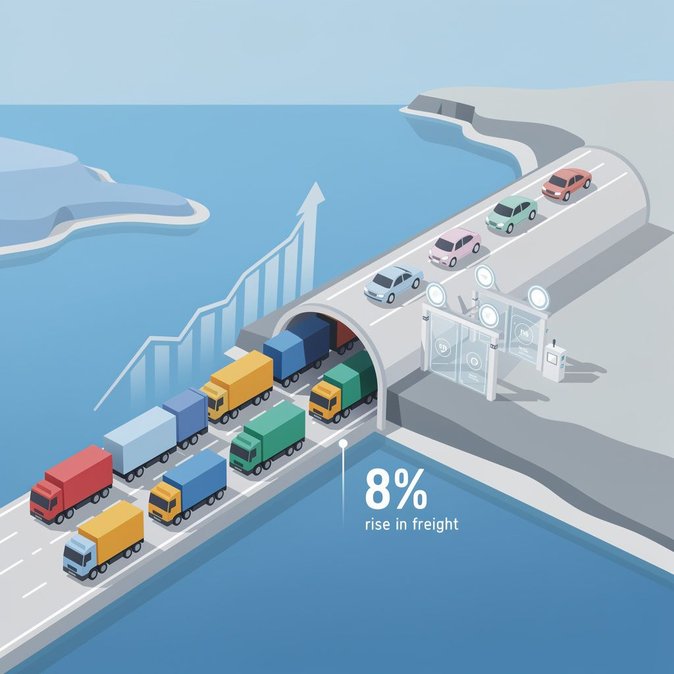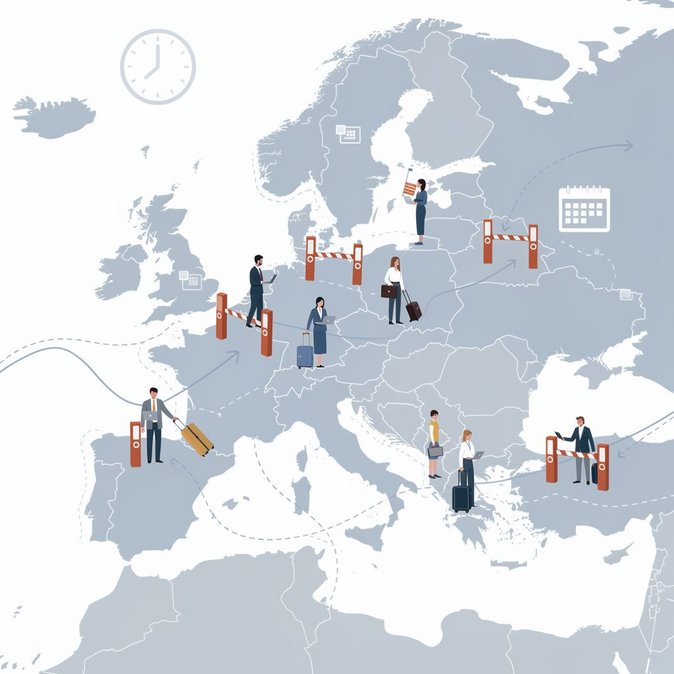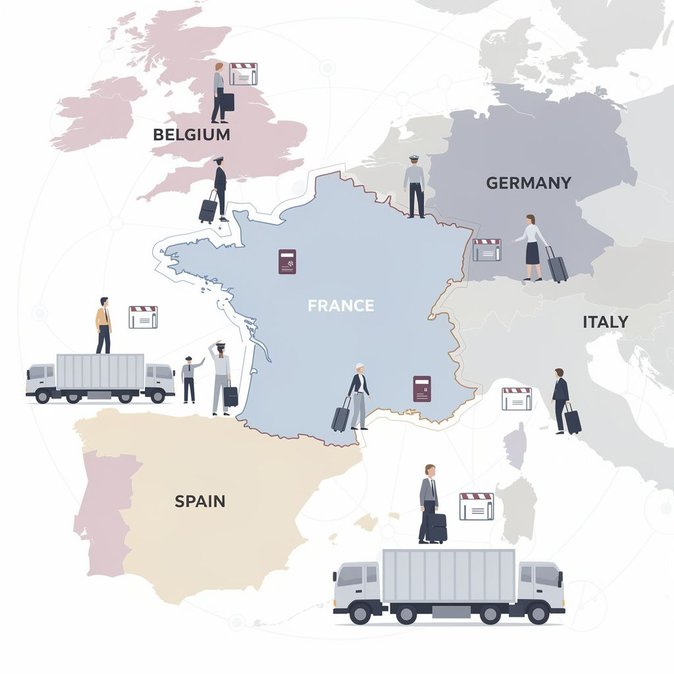
France has told the European Commission that it intends to maintain systematic police and border-guard controls at all of its internal Schengen borders for a further six-month period running from 1 November 2026 to 30 April 2027. The move, revealed on 7 October 2026 in the Commission’s public register of temporary internal-border notifications, extends measures that were already due to expire on 31 October. Controls will therefore continue on France’s land frontiers with Belgium, Germany, Luxembourg, Switzerland, Spain and Italy, as well as at relevant seaports and airports. Paris justifies the prolongation by citing a “combination of persistent jihadist threats, rising antisemitic attacks, criminal networks facilitating people-smuggling and the possibility of radicalised individuals heading for the United Kingdom via the Channel.” The notification also references tension linked to Russia’s war against Ukraine and “hybrid threats” targeting EU infrastructure. Under the Schengen Borders Code, internal checks are supposed to be a measure of last resort and strictly time-limited. France, however, has kept some form of control in place almost continuously since the November 2015 terrorist attacks. The latest announcement is likely to fuel criticism from EU partners who argue that repeated extensions undermine the very principle of a passport-free Schengen zone and generate extra cost and delay for the estimated 350,000 frontier workers who cross French borders daily. For businesses, the immediate impact is limited extra time at land crossings and additional documentation checks for road freight. Companies moving staff between headquarters in Paris and subsidiaries in Brussels, Geneva or Milan should factor in border queues during peak periods and remind non-EU employees to carry valid residence permits. Mobility managers should also monitor any knock-on effects on Eurostar or cross-border rail services, which sometimes adjust schedules when police spot-checks intensify. In the medium term, the decision signals that France is likely to keep special entry procedures in place through the run-up to the 2027 presidential election. Multinationals planning large expatriate moves to or through France in the first half of 2027 should therefore anticipate continued identity checks and possible delays at formerly “internal” borders.
Source: EU Today