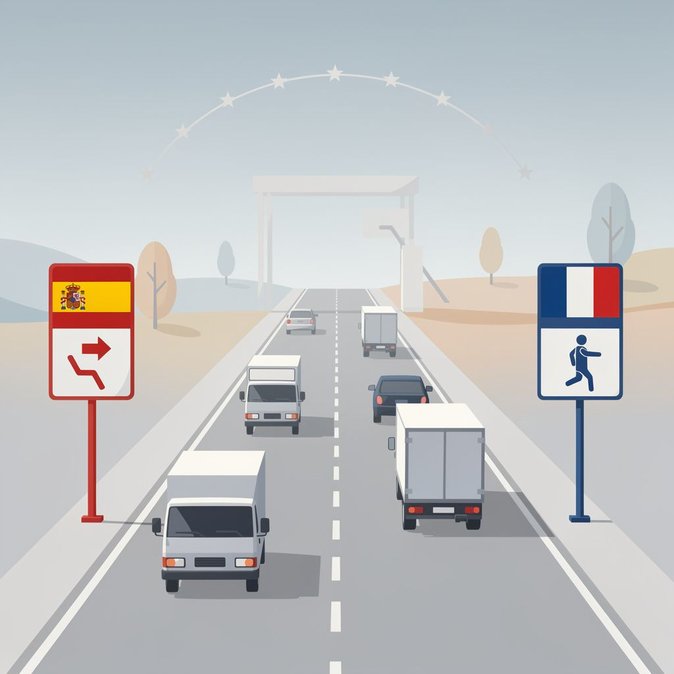
The European Commission’s Schengen control log indicates that Spain’s temporary internal border controls with France, imposed on 23 September amid irregular-migration concerns, expired as scheduled at 23:59 on 7 October. From 8 October, road and rail travellers crossing the Pyrenees via Irún, Le Perthus and Canfranc will once again move under normal Schengen free-movement rules, without systematic ID checks. During the 15-day measure, Guardia Civil officers conducted spot inspections of buses, vans and private cars, causing occasional tailbacks on the AP-7 motorway and at Portbou rail station. Freight operators reported average delays of 45–60 minutes, prompting some firms to reroute via the Basque corridor. The return to open borders is expected to save logistics companies an estimated €1.2 million in overtime and fuel costs over the next month, according to Catalan transport association ASTAC. For business travellers, the change removes an extra layer of documentation—French-resident employees attending meetings in Barcelona will no longer need to allow extra time for exit checks. However, companies should remain alert: Spain’s interior ministry retains the right to re-impose controls at short notice if migration flows spike again or if security services identify new threats. Mobility managers should monitor EU notification portals and build flexibility into cross-border schedules. The episode underscores the fluid nature of Schengen rules in the current security climate and reinforces the need for real-time border-status tracking in global-mobility programs.