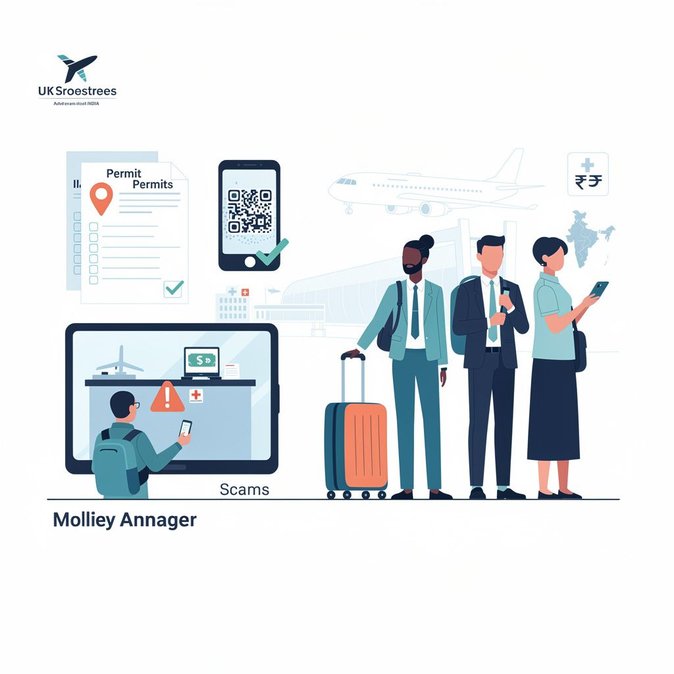
The United Kingdom’s Foreign, Commonwealth & Development Office (FCDO) issued an updated travel advisory for India on 8 October 2026. While the overall risk rating ( ‘be aware of your surroundings’ ) remains unchanged, the notice introduces several important clarifications for business and leisure travellers. First, the entry-requirements section now highlights that some Indian states have re-activated Inner Line Permit (ILP) checkpoints that were relaxed after COVID-19. Travellers heading to Arunachal Pradesh, Nagaland, Mizoram and parts of Manipur must apply for ILPs online at least five working days before arrival. Failure to carry a digital or printed ILP can result in denial of boarding on domestic sectors or fines at checkpoints. Second, the safety-and-security chapter warns of a spike in scams that target foreign executives arriving on e-Business visas. Fraudsters posing as “airport facilitators” offer fast-track immigration and currency-exchange services before disappearing with passports or cash. The FCDO urges visitors to use only government-authorised meet-and-assist desks inside the terminal. The advisory also updates health guidance. Travellers are reminded that a yellow-fever vaccination certificate is mandatory if they have transited through an endemic country, and that private hospitals in Tier-2 cities may require sizeable cash deposits before treatment. A new paragraph notes that the Indian government’s ‘e-Arrival Card’—now mandatory for all passengers—is integrated into the Su-Swagatam mobile-app platform; completing the form in advance reduces immigration wait-times. Why this matters: British companies again rank India among their top five expansion markets. HR and mobility teams should ensure travelling staff secure ILPs where necessary, complete e-Arrival formalities and brief employees on common fraud schemes. Firms with medical-evacuation insurance should re-check hospital networks in secondary cities to avoid unexpected deposits.