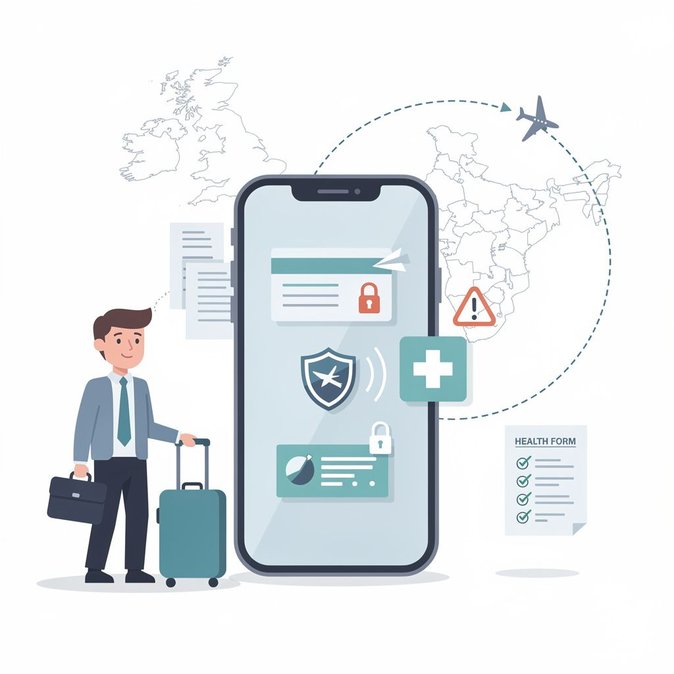
The United Kingdom’s Foreign, Commonwealth & Development Office (FCDO) issued a routine but wide-ranging update to its India travel advisory on 8 October 2026. Although rated as a ‘minor amendment’, the revision adds new detail on access-permit requirements for parts of Arunachal Pradesh, Sikkim and the Andaman & Nicobar Islands; refreshed guidance on scams targeting foreign business visitors in major metros; and a paragraph on the June 2026 relaunch of India’s Air Suvidha 2.0 health declaration. For multinational companies routing staff from the UK to Indian project sites the biggest operational change is the clarification that Protected Area Permits (PAP) and Restricted Area Permits (RAP) are still mandatory for commercial activity in several north-eastern districts. The advisory explicitly reminds travellers that PAP applications can take 4–6 weeks and must include local-partner endorsements – a timeline that mobility teams often underestimate when planning rapid-deployment assignments. The FCDO also expands its section on fraud, noting a spike in ‘SIM-swap’ and QR-code invoice scams reported by British chambers of commerce in Mumbai and Bengaluru. Corporate travellers are urged to use enterprise VPNs on public Wi-Fi and to verify UPI payment requests verbally. Insurers may use the advisory wording when assessing coverage for cyber incidents abroad. Another key insertion references Air Suvidha 2.0, India’s health-self-declaration portal re-introduced in June 2026. The UK notice advises all passengers – irrespective of vaccination status – to complete the web form within 24 hours of arrival. This formal acknowledgment by a major partner government increases the likelihood that airlines will enforce the requirement at London check-in desks, so mobility coordinators should update pre-departure checklists immediately. While the overall risk rating for India remains ‘monitor and exercise normal precautions’, the granular updates matter for compliance-conscious firms. Failure to secure PAP/RAP documents can result in fines, deportation or blacklisting under India’s Foreigners Act, jeopardising future market access. HR professionals should circulate the new FCDO links to travelling staff and align them with company travel-risk policies.