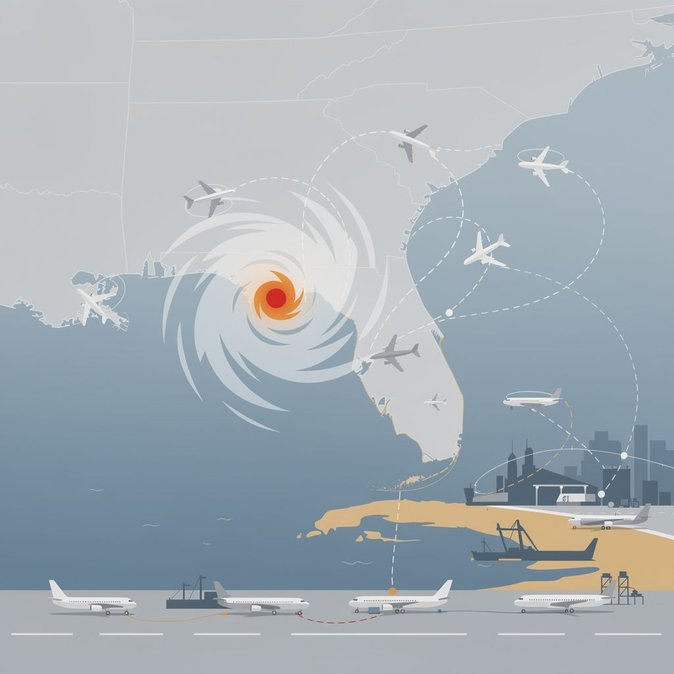
Hurricane Isaias, the Atlantic season’s first hurricane, strengthened to Category 1 on 8 October and is forecast to make landfall late Friday near the Alabama-Florida border, according to the National Hurricane Center. Storm-surge watches stretch from Louisiana’s Plaquemines Parish to the Florida Panhandle, and meteorologists warn of 3-to-7 foot coastal inundation and up to 10 inches of rain in some areas. Airlines moved quickly. JetBlue refreshed its system-wide travel-alert page on 7 October, activating fee-free rebooking through 14 October for passengers whose itineraries touch Gulf airports. Frontier Airlines likewise posted a flexible-travel policy covering Pensacola (PNS) and New Orleans (MSY) for flights between 9 and 10 October. United and Delta are expected to follow based on prior hurricane protocols. The FAA’s Air Traffic Control System Command Center warned of possible ground stops at Houston, Mobile and Tallahassee as early as Thursday night. For corporate mobility teams the timing is awkward: autumn is peak season for quarter-end project rotations and sales conferences. Travel-management companies report a surge in itinerary changes as firms reroute employees through Atlanta and Dallas, adding significant cost. Relocation shipments moving by truck from Texas petrochemical plants to East-Coast projects are also at risk of weather delays. Employers with assignees in the projected landfall zone should activate emergency-notification trees, verify temporary housing can withstand hurricane-grade winds and remind travelers that many Gulf states enforce price-gouging laws once a state of emergency is declared. Foreign nationals awaiting visa appointments abroad should monitor Consular Affairs alerts; U.S. embassies have historically suspended routine visa services if local infrastructure is compromised by major storms.