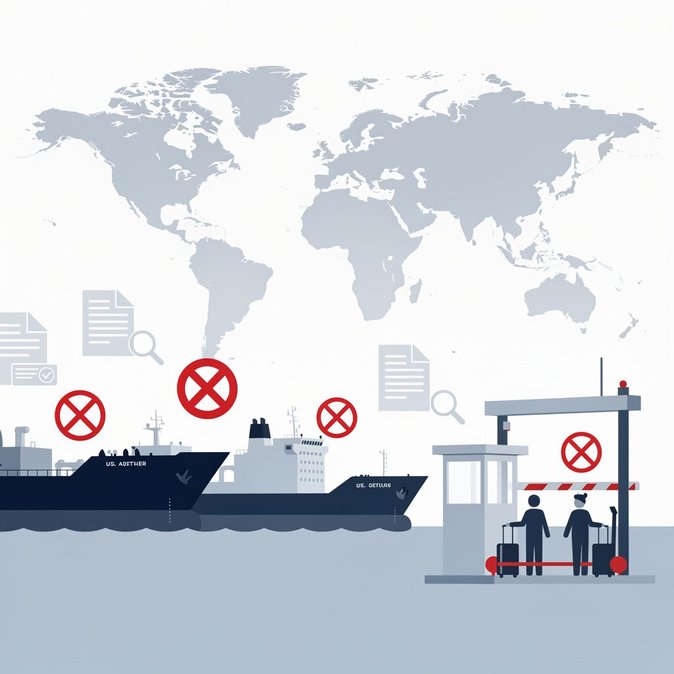
The U.S. Department of the Treasury on 8 October rolled out a sweeping round of sanctions under “Operation Economic Outcast,” designating 17 tankers and dozens of front-company owners that enable Iran to move oil in defiance of U.S. restrictions. All newly listed entities are now on the Office of Foreign Assets Control’s Specially Designated Nationals (SDN) list, which automatically bars them—and their officers—from receiving U.S. visas or entering the United States. Treasury Secretary Scott Bessent said the action “neutralizes the vast majority of Iran’s remaining shadow-fleet network” and warned non-U.S. persons that facilitating blocked vessels now carries heightened secondary-sanctions risk, including loss of access to the U.S. financial system and ineligibility for ESTA travel. Several of the tankers—such as the *STARWAY* and *KING CHAIN*—have called at Gulf Coast refineries in past years under flags of convenience; CBP officers have been instructed to deny future entry. For multinational energy companies and maritime insurers, the designations complicate crew rotations and port calls. Any seafarer who served aboard a listed vessel in the past five years can be deemed inadmissible under Immigration and Nationality Act §212(a)(3)(B). Human-resources teams must therefore screen shipping logs before arranging U.S. training or shore assignments for foreign crew members. Logistics providers should also expect more intensive Cargo Targeting System holds, as CBP aligns with Treasury to intercept sanctioned petroleum. While most corporate assignees are unlikely to touch the shadow fleet directly, global mobility managers in oil-and-gas, shipping and commodity trading should update restricted-party-screening protocols and alert travelers that ESTA approvals may be revoked if their employer is linked to designated entities.
Source: U.S. Department of the Treasury