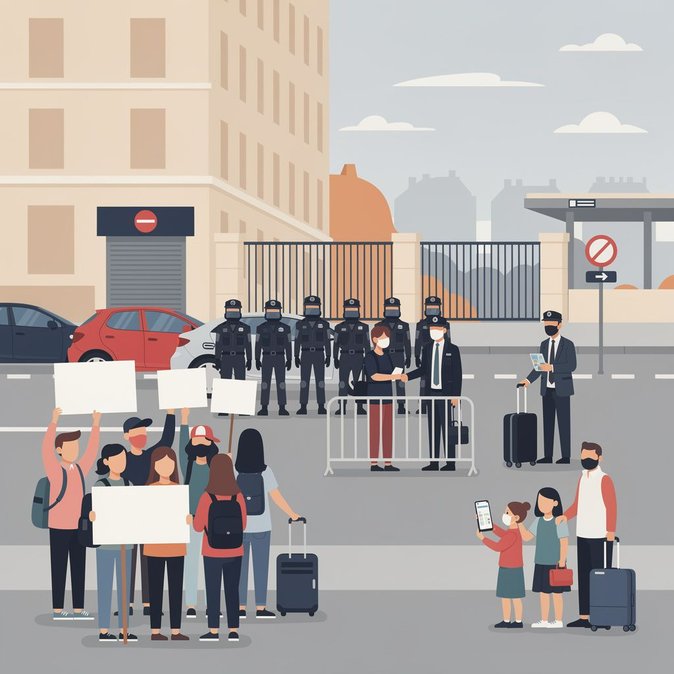
France’s wave of high-school protests entered a new—and more disruptive—phase on October 8 and 9 2026, with thousands of students erecting barricades at school gates from Paris to Marseille. While the demonstrations focus on teacher shortages and overcrowded classrooms, the knock-on effects are being felt by business travellers and assignment managers as riot-police deployments spill into rail stations and arterial roads. Euronews reporters on the ground in Paris’s 5ᵗʰ arrondissement described rubbish-bin fires blocking traffic as early as 06:30, forcing city buses to divert and delaying employee shuttles servicing La Défense. The RATP confirmed that at least six metro entrances near protest hotspots were temporarily closed for safety checks, while SNCF warned of “possible last-minute cancellations” on suburban Transilien lines. Travellers heading to Charles-de-Gaulle and Orly airports should budget an additional 45 minutes, the civil-aviation authority DGAC advised. The Interior Ministry has temporarily suspended the use of stun grenades after a teenage protester lost a hand earlier in the week, but large contingents of CRS riot police remain stationed at transport nodes. Companies running commuter shuttle services or planning in-country client visits are therefore urged to monitor prefecture alerts and activate contingency routing. HR teams should also check curfew rules for minors, as detained foreign dependants could face immigration formalities if parents cannot be reached quickly. Education Minister Édouard Geffray has promised an “emergency plan” to recruit supply teachers within days, but union leaders say mobilisations will continue until a concrete hiring timeline is published. The situation could escalate further on October 10, when the powerful CGT union has called for solidarity walkouts that may hit the Paris RER and regional TER networks. For global-mobility managers the key takeaway is preparedness: brief travellers to carry photo ID for police checks, register itineraries with risk-management providers, and consider flexible working or remote-meeting options until the protest calendar becomes clearer. Although immigration controls at borders remain unchanged, prolonged street blockades could affect the timing needed to reach ETIAS pilot kiosks at airports, adding a secondary layer of delay for non-EU visitors.
Source: Euronews