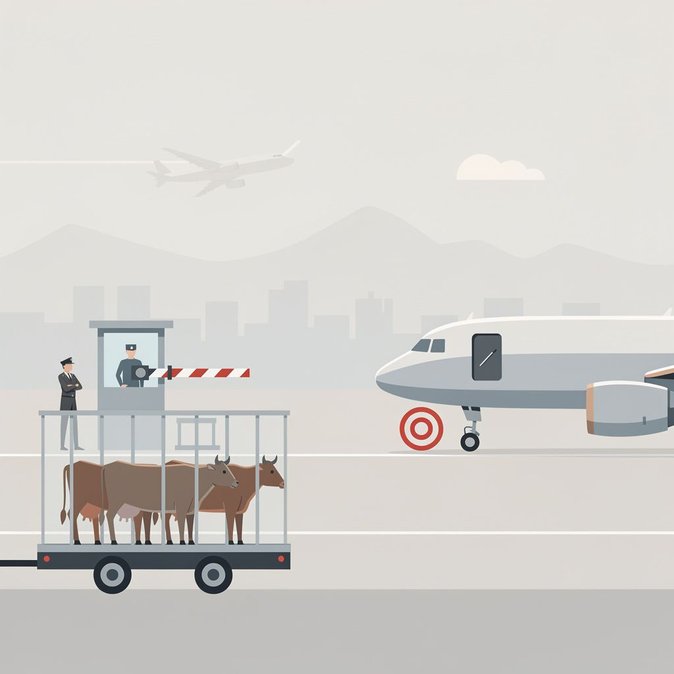
Austria’s health ministry has ordered an immediate halt to live-animal export flights from Linz–Hörsching Airport following inspection failures uncovered on the Hungarian side of the supply chain. Twelve Boeing 747 charters had been scheduled to carry 80 Fleckvieh bulls each from Hungary via Linz to Turkmenistan this week; the last three rotations have now been cancelled. Officials cite inadequate holding facilities and feeding arrangements at the airport’s veterinary border-inspection point (BIP). The ministry has “temporarily withdrawn” the BIP’s approval, effectively banning further livestock exports until corrective measures are certified. Airport spokesman Ingo Hagedorn confirmed no animals remain on site but conceded the suspension will dent landing- and handling-fee income. Although the move concerns animal welfare, it also exposes shortcomings in Austria’s border-control infrastructure just weeks after the launch of the “Smart Border Austria” digital freight-clearance programme. Experts warn that any prolonged closure could divert niche cargo operators—and associated jobs—to competing hubs in Munich or Prague. The government says EU proposals to tighten the Animal Transport Regulation will be reviewed to see whether they close the “regulatory gaps” that allowed the Linz flights to proceed. Until then, freight forwarders shipping high-value livestock or perishable goods should seek alternative departure points and confirm inspection-capacity status during booking. For global-mobility and supply-chain managers, the case underlines the importance of auditing airport BIP certifications—especially when arranging charter flights that combine multiple jurisdictions, as Hungary’s origin checks were crucial in triggering Austria’s response.
Source: ORF Oberösterreich