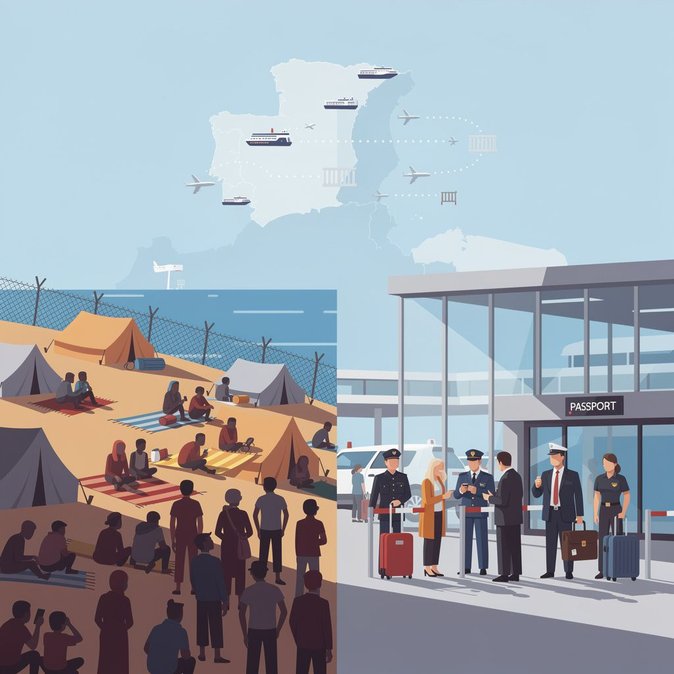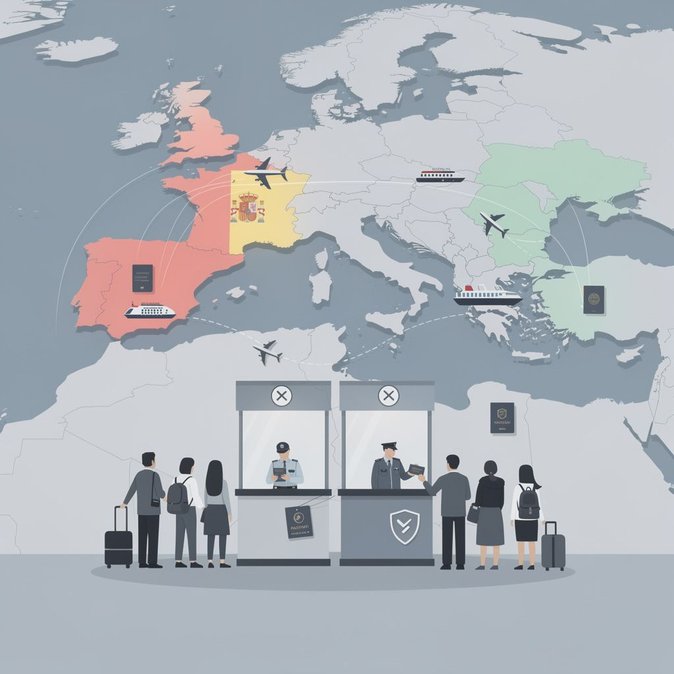
An updated list published by the European Commission’s Directorate-General for Migration and Home Affairs shows that both Spain and Italy have filed fresh notifications prolonging internal Schengen controls linked to July’s mass Ceuta crossing. Spain will maintain document checks on passengers arriving by air and sea from Italy between 8 and 22 October, while Italy continues equivalent controls on travellers from Spain until 16 October. Although limited to identity verification rather than full immigration inspections, the measures oblige carriers to perform 100 % passport checks at departure gates and have triggered random secondary screening on arrival. Airlines report minor boarding-gate queues but no significant flight delays; however, AENA has deployed extra staff at Madrid-Barajas Terminal 4 to manage peak-wave flows. For travellers, the practical impact is a return to pre-Schengen routines: carry a valid passport or national ID card and allow extra time at the gate. Corporate-mobility teams should emphasise this to assignees accustomed to intra-EU travel without documents. Under Schengen rules, temporary internal controls introduced for unforeseeable threats may last up to three months. Both governments indicate they will lift the checks once reception pressures in Ceuta subside, but analysts warn that further extensions are possible if secondary movements of irregular migrants persist. The episode underscores how external-border crises can ripple into internal Schengen travel, adding friction to business itineraries and raising compliance risks for staff who travel with driving licences only.