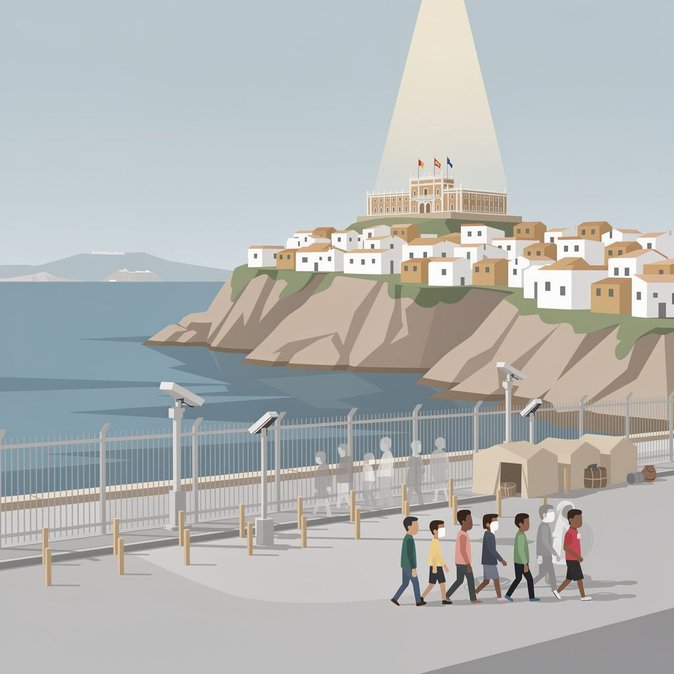
The Spanish Government says 11,026 people who entered Ceuta irregularly since July have now returned to Morocco—10,513 voluntarily and 513 through expulsion—but concedes that an unknown number are still sheltering in hillside barrios and disused buildings. The figures were released on 9 October by Minister of Territorial Policy Ángel Víctor Torres as the city braces for a high-profile visit by King Felipe VI and Queen Letizia on 13 October. Officials attribute the latest spike in returns to a police operation that cleared the infamous beach encampment known as “El Trampolín”, which alone accounted for 1,813 departures. Yet NGOs on the ground report that many migrants simply moved inland to neighbourhoods such as El Príncipe, where community groups now provide ad-hoc shelter. A field report by El País chronicles families living in makeshift conditions and highlights the difficulties of tracking minors, 2,827 of whom remain in the protection system. The continuing uncertainty complicates security planning for the royal visit and feeds into Spain’s decision to prolong border checks on travellers from Italy. It also creates operational challenges for companies moving staff through Ceuta’s port, which has become a staging area for temporary accommodation centres. In response, Madrid has expanded its reception capacity from 2,000 to more than 7,000 places and pledged €45 million in emergency funding to the autonomous city. Employers with operations in North Africa are advised to monitor ferry schedules, which may be adjusted on short notice, and to remind assignees to carry passports even on routine cross-Strait commutes. Analysts warn that while headline numbers of returns look impressive, the lack of precise data on those still in Ceuta could undermine future policy decisions—particularly if authorities opt for further internal border controls or accelerated deportations.
Source: Canal Sur / El País