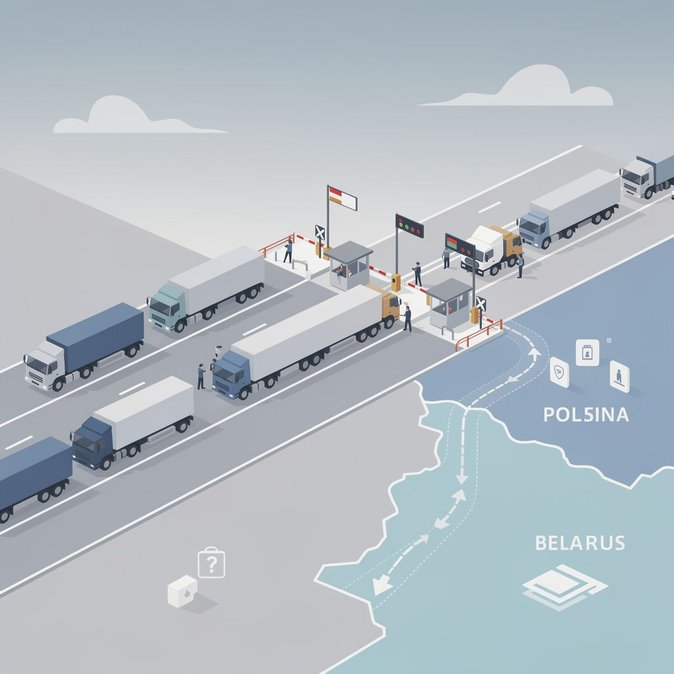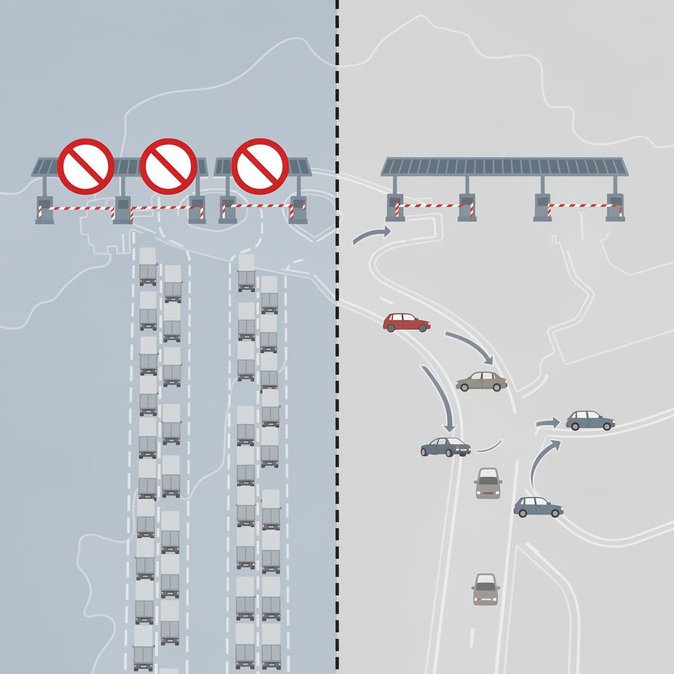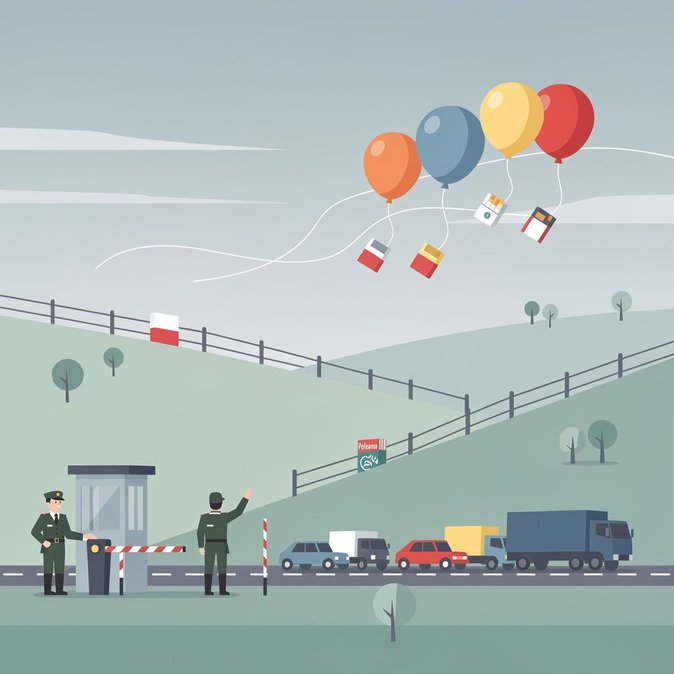
Poland’s Podlaskie Border Guard unit announced on 9 October the arrest of six people—four Lithuanians and two Belarusians—after uncovering an elaborate scheme that used weather balloons to float contraband cigarettes over the Polish-Belarusian frontier. Officers seized 25,000 packs worth an estimated PLN 450,000 (about €95,000) after intercepting two vehicles near Kuźnica and Zawady. The cars had been fitted with modified fishing reels designed to reel in balloon-suspended cargo once it drifted across the border fence. The arrests mark the latest escalation in a trend that has complicated mobility and security management in the sensitive border region. Since January, authorities have recorded 46 balloon-based drop attempts, a tactic smugglers favour because traditional ground sensors and patrols struggle to detect slow-moving objects above the fence line. For Poland, cigarette smuggling is more than a tax problem; it is a vector for broader cross-border crime that can mask the movement of people and weapons. The Ministry of Finance says illicit tobacco already costs the Polish treasury over PLN 2 billion a year—funds that could be channelled into modernising border infrastructure. From a corporate-mobility perspective, companies with expatriate staff in Białystok, Suwałki or the Karpiel valley should expect ad-hoc road closures, increased ID checks and occasional delays on the S19 and DK8 trunk roads as security forces mount counter-smuggling operations. Supply-chain managers moving just-in-time cargo via the Kuźnica crossing may also face longer clearance times, as customs officers deploy drones and thermal cameras to track airborne drops. Officials are lobbying Brussels for EU funding to purchase radar-equipped tethered balloons—ironically mirroring smugglers’ own methods—to detect low-altitude incursions. A pilot project could be operational by winter 2026/27, enhancing Poland’s ability to secure the external Schengen frontier.
Source: Reform.news