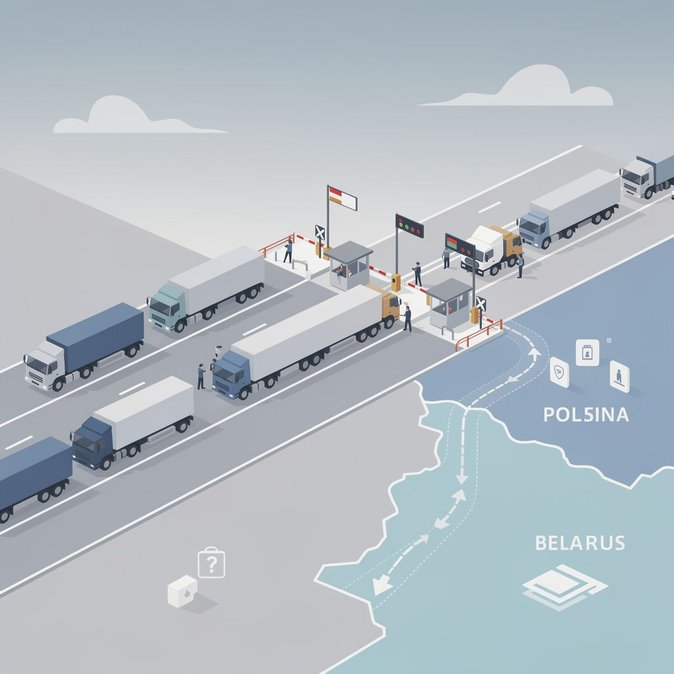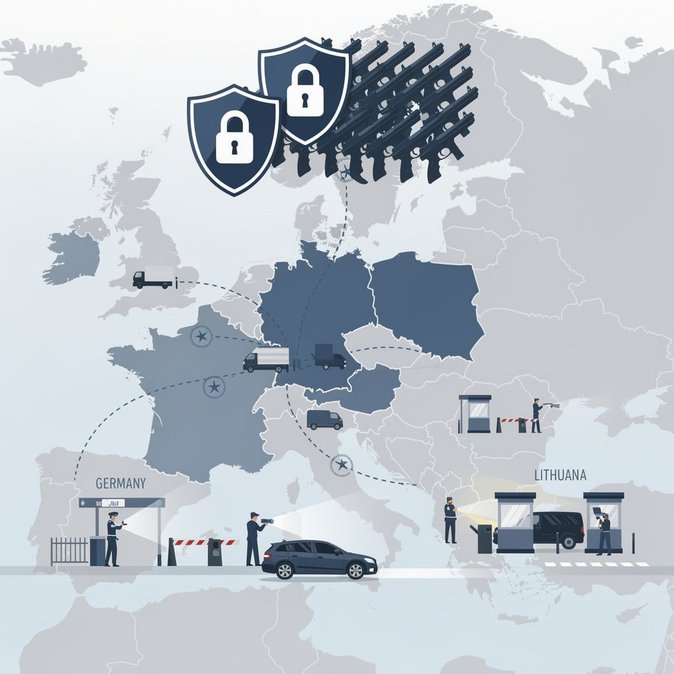
An unprecedented two-week sting operation coordinated by INTERPOL—code-named “Trigger X”—has resulted in the seizure of 2,823 firearms, 400 hand-grenades and more than 40,000 rounds of ammunition across 17 countries, including Poland. Conducted between 22 June and 5 July but publicly released on 9 October, the operation targeted trafficking routes that move conflict-origin weapons from Eastern Europe and the Caucasus into the European Union. Polish authorities worked alongside counterparts from Serbia, Ukraine and Georgia, sharing real-time intelligence via INTERPOL’s I-CORE platform and stepping up spot checks on road and rail corridors that feed into Germany, the Czech Republic and the Baltic States. Investigators say Soviet-era pistols, assault rifles and grenade launchers were among the items intercepted, many of them traced back to warehouses in the Balkans and Central Asia. Analyses of ballistic signatures indicate that several weapons had previously been used in robberies and people-smuggling along the so-called “Baltic route”, which runs through north-eastern Poland into Germany and Scandinavia. For Poland, the haul underscores how criminal networks exploit the country’s strategic location on the EU’s eastern flank. Border Guard (SG) officials told media that temporary checks introduced at the German and Lithuanian borders on 2 October will remain essential, as traffickers increasingly try to piggy-back ordinary passenger traffic to move small arms in car boots, tourist coaches and even courier parcels. Business travellers and corporate mobility managers should therefore expect tighter inspections of vehicles and luggage at major road crossings such as Świecko, Budzisko and Dorohusk. Logistics firms moving high-value or controlled goods through Poland are advised to factor additional screening time into delivery schedules and ensure drivers carry complete CMR documentation. Longer-term, the government plans to connect the national Ballistic Information System with the EU-wide EES/ETIAS platforms, allowing frontline officers to flag suspicious travellers who have firearms or explosive offences on record. The Ministry of the Interior has already earmarked PLN 110 million for new X-ray scanners and automatic licence-plate-recognition cameras at 11 land crossings by Q2 2027.
Source: INTERPOL