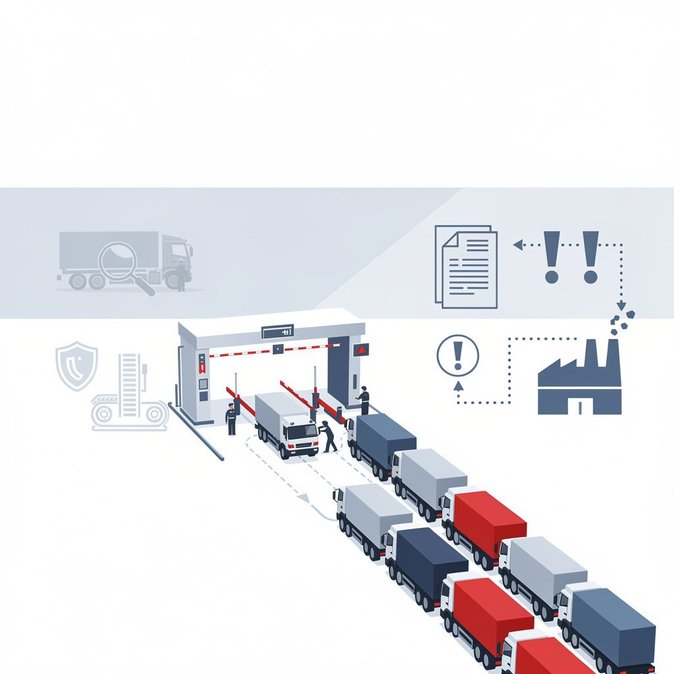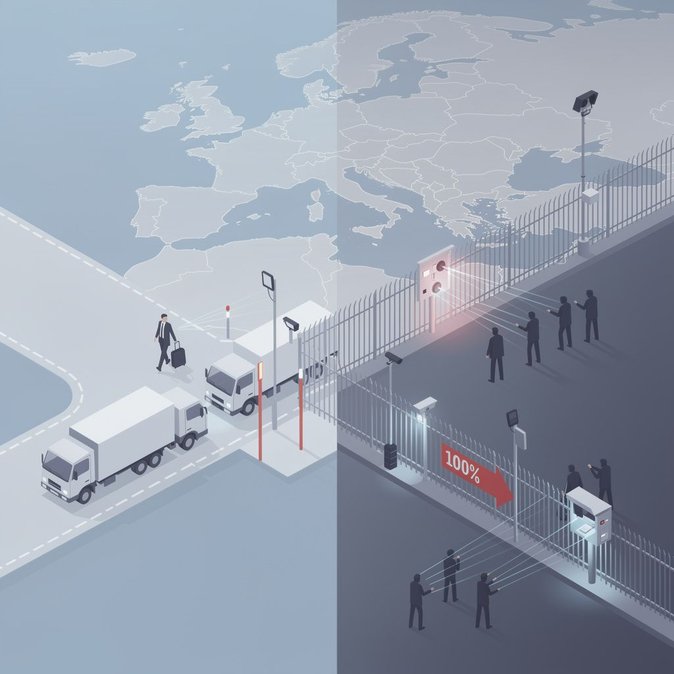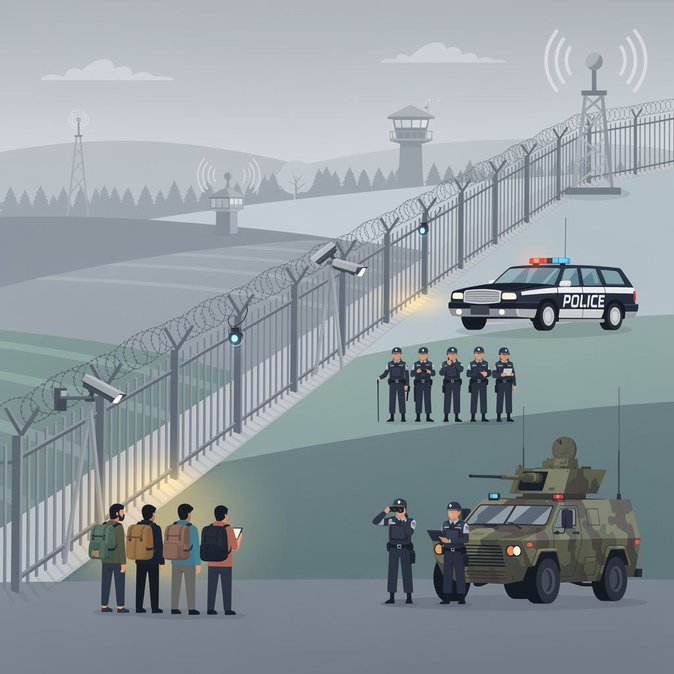
Poland’s Border Guard (SG) claims that not a single undocumented migrant managed to cross the Polish-Belarusian frontier in September, marking what officials call a “100 percent effectiveness” rate for the month. In a statement released on 11 October, the SG said it had detected and pushed back all attempted crossings, crediting the results to the 186-kilometre steel wall completed last year, thermal-imaging towers, a new network of motion sensors and constant joint patrols with the army and police. Behind the numbers lies an aggressive enforcement strategy authorised by emergency legislation that allows officers to return people found between official checkpoints without formally registering an asylum request. Human-rights groups argue that the practice violates EU asylum law, while the Council of Europe’s Commissioner for Human Rights has asked Warsaw to guarantee individual screenings. For now the government insists the measures are legal because Belarus and Russia are “weaponising migration” to destabilise the EU’s eastern flank. For businesses the message is two-fold. First, the physical barrier and electronic surveillance make it extremely difficult for irregular labour to reach Poland from the east, tightening an already constrained low-skill labour pool. Second, the government shows no sign of relaxing the state of emergency on the frontier; corporate security managers should therefore assume continued military and police activity in the border zone, possible road closures around construction sites for new sensor masts and a near-zero chance that Belarusian citizens will receive humanitarian visas at the line itself. Employers needing Belarusian talent must channel candidates through regular consular posts in Grodno or Minsk and budget extra time—visa refusal rates for Belarusian applicants rose to 18 percent in the third quarter, according to the SG. Logistics operators, meanwhile, welcome the fact that the number of violent incidents against truck drivers has fallen sharply compared with 2025, but warn that tighter checks lengthen waiting times (see queue story below). In short, Poland is doubling down on hard-border tactics that will continue to shape mobility planning for companies active in the region.
Source: Poland-24