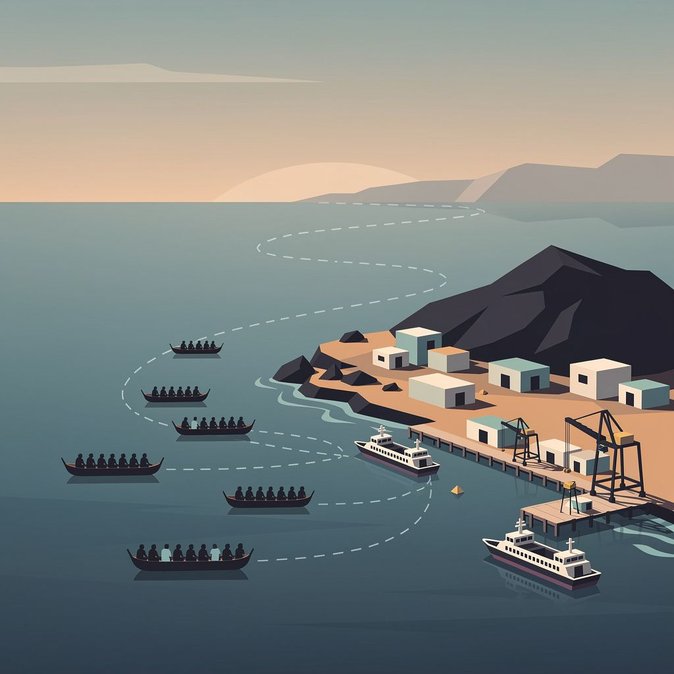
Just hours after Sunday’s dual rescues near Gran Canaria and Lanzarote, two additional cayucos carrying a combined 356 migrants docked at El Hierro, raising the 24-hour arrival tally to 668—the highest daily figure since November 2024. El Hierro’s small harbour lacks a permanent reception facility; emergency tents were erected while Red Cross volunteers performed triage and COVID-19 screenings. The sudden spike forced regional authorities to reroute ferry schedules and charter a Navantia vessel to transfer 200 migrants to Tenerife for processing. Mobility planners operating inter-island transport should expect ad-hoc cancellations during mass-arrival days, especially for cargo that competes with humanitarian transfers. The Port Authority of Santa Cruz de Tenerife has advised shipping lines to file contingency berthing plans for the remainder of hurricane season, when calmer Atlantic weather often accelerates departures from West Africa. From a policy standpoint, the numbers reignite debate over Spain’s so-called ‘Derivation’ system, under which newcomers are flown to mainland cities within 72 hours to avoid bottlenecks on islands. Interior Ministry sources suggest the next derivation flight could leave as early as 14 October, likely bound for Valencia or Barcelona. Corporate travel managers sending personnel to El Hierro—often for renewable-energy projects—should verify accommodation availability, as hotels sometimes block-book rooms for emergency responders during large-scale arrivals.
Source: Agencia EFE