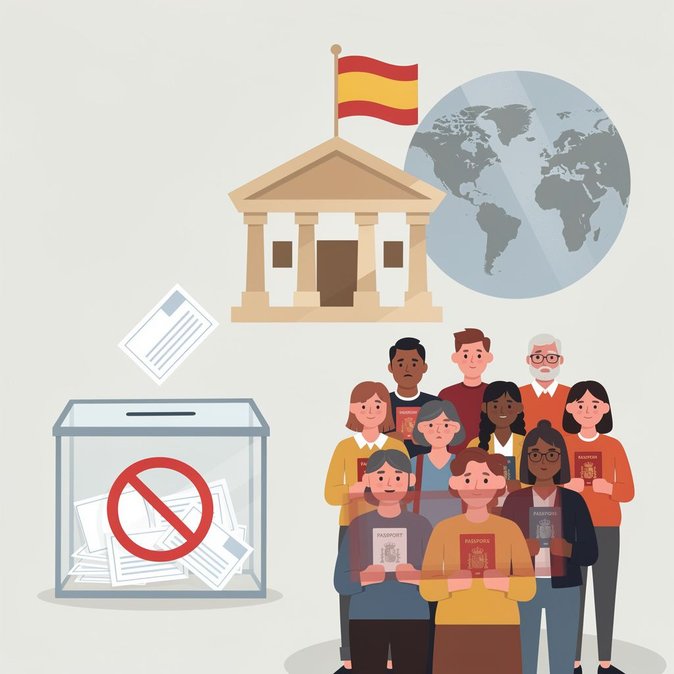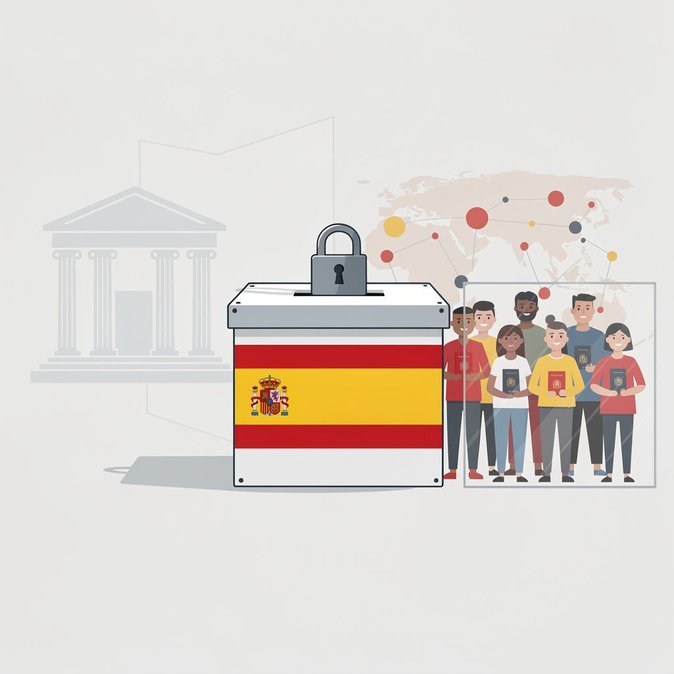
Spain’s highest court has upheld the provisional suspension of voting rights for 163,020 recently naturalised Spaniards under the so-called Ley de Nietos, the 2022 reform that allows descendants of Spanish exiles to reclaim nationality. The Supreme Court ruled on 12 October that, for the 29 November general election, the electoral roll must remain frozen as of 1 August while it studies several appeals alleging that the Ministry of Justice’s broad interpretation of exile status exceeded the law’s intent. The decision comes at the height of Spain’s campaign season and on the country’s National Day, a public holiday when administrative deadlines are normally paused. Critics say the timing underlines judicial concern about safeguarding electoral integrity, while supporters of the law accuse the court of disenfranchising Latin-American dual nationals who rushed to formalise citizenship in recent months. Political parties are now scrambling to mobilise overseas Spaniards who remain eligible, especially in Argentina, Cuba and Mexico, where large exile communities reside. For global-mobility managers, the ruling prolongs uncertainty for employees who recently obtained Spanish passports and expected full civic rights, including the ability to vote from abroad via Spain’s revamped electronic voting system. HR teams should advise affected staff that their new nationality remains valid for travel and work purposes, but political participation is on hold until the court issues a final verdict—likely after the election. The case also highlights Spain’s growing use of nationality law as a diaspora-engagement tool. Since 2023, more than 220,000 people have applied under the Ley de Nietos; nearly three-quarters live in the Americas. Companies with operations in Spain may find talent acquisition easier as newly minted citizens gain free movement in the EU, even if their political rights are delayed. Legal analysts expect the court to demand tighter documentation of exile status, which could slow naturalisation workflows at consulates in 2027. Firms should monitor forthcoming instructions from the Ministry of Justice and the Central Electoral Board to anticipate processing backlogs and potential travel to Spain for in-person registration.
Source: El País