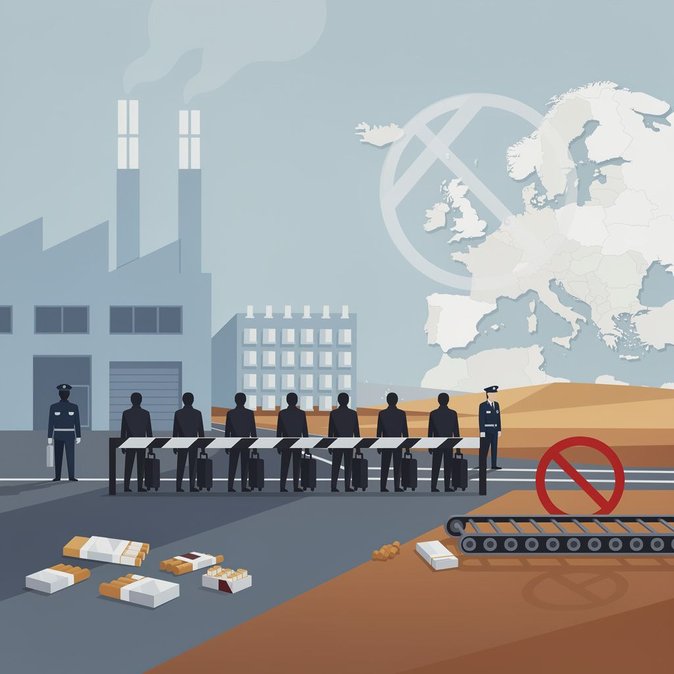
In a case highlighting Warsaw’s tougher stance on criminality among foreign nationals, the Border Guard confirmed today that nine Belarusian citizens have been forcibly removed from Poland and issued with seven-year Schengen re-entry bans after completing sentences for running an illicit cigarette plant. Working out of a warehouse in northern Poland, the group had operated industrial-scale machinery producing untaxed cigarettes for EU grey markets, causing millions in excise losses. After a joint investigation with the Regional Prosecutor’s Office in Gdańsk, a court ordered deportation upon sentence completion under Article 329 of the Aliens Act. The case is the first bulk deportation executed under amendments adopted in April 2026 that allow immediate removals of third-country nationals convicted of organised-crime offences deemed a threat to public order. Under the new rules, appeals do not suspend execution when national security is invoked. For employers, the incident is a reminder that due-diligence obligations extend beyond hiring: hosting or subcontracting foreign nationals can trigger liability if work permits or residence titles are misused. HR departments should verify that external labour agencies hold clean compliance records and monitor upcoming drafts of the long-awaited Foreign Workers Act, scheduled for Sejm debate in November. From a mobility perspective, Schengen-wide entry bans are now systematically entered into the Entry/Exit System (EES), meaning the individuals cannot relocate to other EU states. Companies facilitating intra-EU transfers should ensure transferee records are clear of such alerts.
Source: Straż Graniczna – Komenda Główna