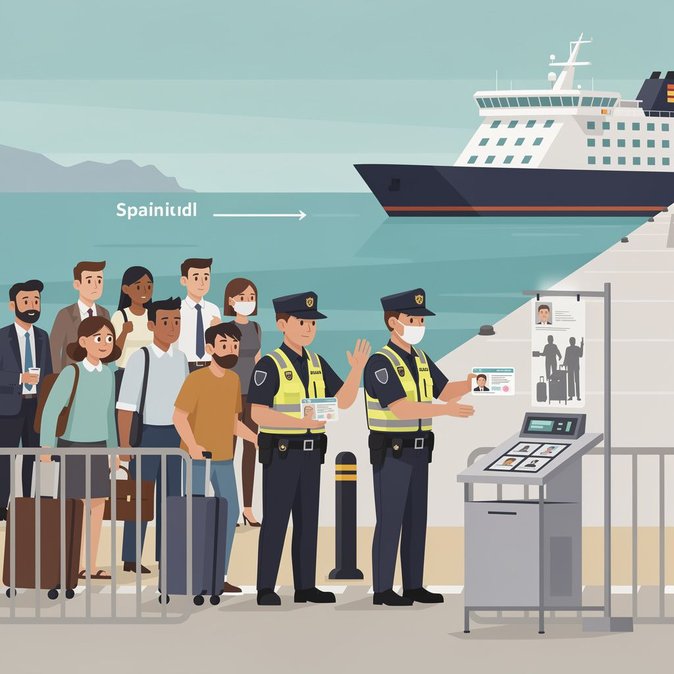
Spanish National Police carried out a dawn operation on 15 October in Ceuta’s ferry terminal, arresting 40 migrants and five alleged facilitators who were attempting to board ships to Algeciras with stolen or borrowed Spanish ID cards. Investigators say the travellers paid up to €6,000 for genuine documents that resembled their appearance enough to survive a cursory check. Officers became suspicious when the facial features of several passengers did not match the photographs on the ID cards and asked for secondary screening. According to the Ministry of the Interior, the detainees are mostly North-African nationals who entered Ceuta during the mass crossing of 30–31 July. Since that crisis, police have logged a sharp rise in theft reports for Spanish passports and ID cards in the enclave, suggesting an organised market for documents. Detectives believe the same IDs have been reused multiple times by different migrants, pointing to a wider trafficking network that profits from Spain’s busy ferry link to the mainland. The force has reinforced controls in Ceuta with specialists from its “Punto Atenas” document-fraud unit and is coordinating with prosecutors to investigate possible charges of facilitating illegal immigration and document forgery. The arrests come just days before EU leaders gather in Brussels to debate the bloc’s response to the summer’s Ceuta influx, underscoring Spain’s determination to show it has the situation under control. For companies moving staff through the Algeciras–Ceuta corridor, the crackdown means more stringent ID checks, longer boarding times and higher risk of onward-travel delays. Mobility managers should brief travellers to allow extra time and carry additional proof of identity, especially if their physical appearance has changed since their last photo ID was issued. Carriers are reminded that knowingly transporting improperly documented passengers can attract heavy carrier liability fines under Spanish law.
Source: Ministerio del Interior