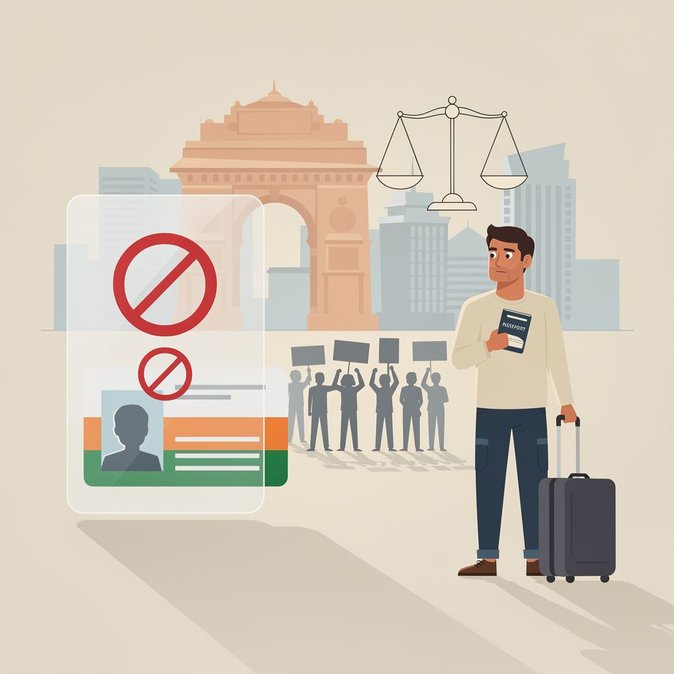
Mumbai Police on 15 October 2026 served a **Leave India Notice (LIN)** on Bollywood actor Imran Khan—an American citizen and Overseas Citizen of India (OCI) card-holder—ordering him to depart the country by 28 October. The action follows his detention during a protest demanding the resignation of Chief Election Commissioner Gyanesh Kumar. Police cited alleged violations of the Immigration & Foreigners Act, arguing that Khan’s participation in a political demonstration exceeded the privileges accorded under the OCI scheme. While OCI status confers a lifelong, multiple-entry visa, it does not grant political rights such as voting or standing for office. Legal experts are split on whether peaceful protest counts as ‘political activity’ under Section 7D of the Citizenship Act, which allows cancellation of OCI registration for actions affecting “sovereignty and integrity of India.” Khan’s lawyers told reporters he will petition the Bombay High Court to quash the notice, contending that the Constitution guarantees freedom of speech irrespective of citizenship and that no specific visa condition prohibits attending a protest. The case could set a precedent affecting the 6 million-plus OCI card-holders worldwide—many of whom run businesses or hold senior roles in Indian subsidiaries. For HR and mobility teams, the episode is a reminder to brief foreign assignees—particularly OCI holders—on the nuanced restrictions that still apply. Participation in rallies, political fund-raising, or media commentary can, in extreme cases, invite visa cancellation or deportation. Companies should review crisis-response protocols and ensure that communications around politically sensitive events highlight the immigration implications for non-citizens. If the High Court upholds the notice, legal analysts expect the Home Ministry to issue clarifying guidelines on permissible activities for OCI holders, similar to the 2021 circular that limited missionary work by tourist-visa holders.
Source: Livemint