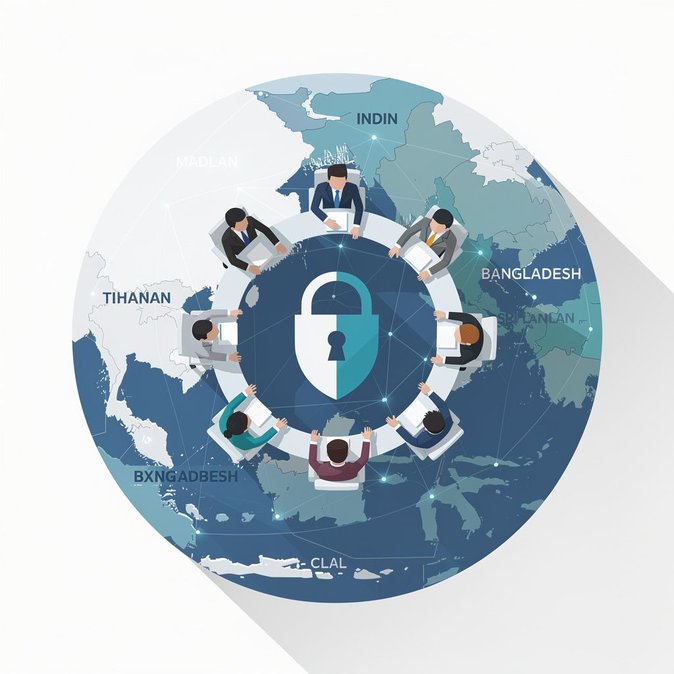
Meeting in New Delhi on 13–14 October 2026, Home Ministers of the seven BIMSTEC nations—Bangladesh, Bhutan, India, Myanmar, Nepal, Sri Lanka and Thailand—adopted the “Delhi Declaration”, the grouping’s first comprehensive security communiqué. Chaired by India’s Union Home Minister Amit Shah, the forum agreed to institutionalise intelligence-sharing on terrorism, narcotics, human trafficking, cyber-crime and illicit financial flows across the Bay-of-Bengal corridor. Key takeaways include creation of a BIMSTEC Working Group on Counter-Terrorism with rotating annual chairmanship, activation of a real-time “Red Notice Exchange” platform that will plug national criminal-databases into INTERPOL systems, and a commitment to finalise a regional Treaty on Mutual Legal Assistance and Extradition by mid-2027. For India, the move dovetails with the government’s push to secure its 15,000-kilometre land border through technology and coordinated policing rather than unilateral fencing. New protocols will allow faster repatriation of fugitives and streamlined sharing of biometric data—a boon for compliance teams managing cross-border staff rotations in the pharmaceuticals, infrastructure and energy sectors that straddle Nepal, Bhutan and Myanmar. Business-travel operators stand to benefit too: the declaration instructs member states to explore common API (Advance Passenger Information) standards and Traveller Verification Gateways at regional airports, laying the groundwork for eventual trusted-traveller lanes. Although timelines remain aspirational, the political commitment marks BIMSTEC’s most concrete leap from economic rhetoric to security action, signalling that companies must factor enhanced enforcement against narcotics and money-laundering into their South Asian risk models.
Source: The Indian Express