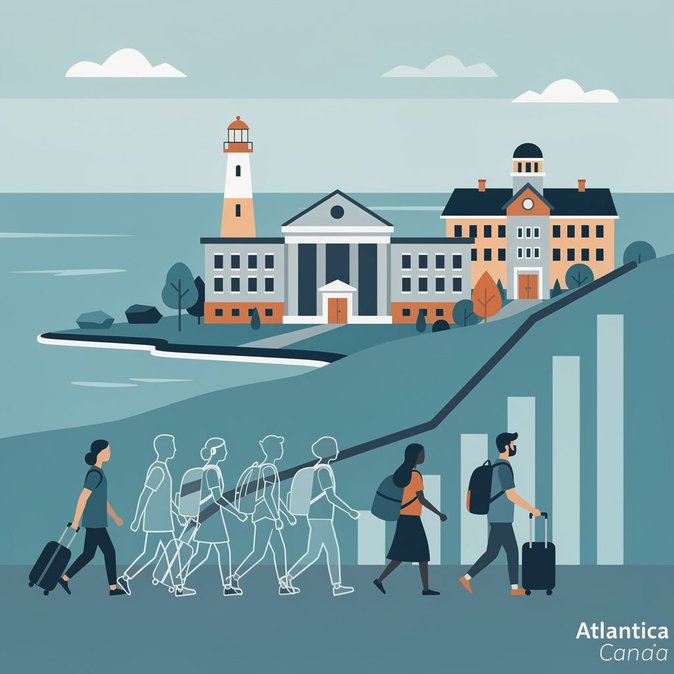
Atlantic Canada’s universities have lost nearly half of their international student body in just two recruitment cycles, according to preliminary enrolment data released 14 October 2026 by the Association of Atlantic Universities and highlighted in IRCC.com on 16 October. Full-time foreign student numbers fell another 18 % year-on-year—3,020 students—bringing the cumulative decline to 48 % since Ottawa began capping study-permit intake and doubling proof-of-funds thresholds in 2024. University presidents warn the drop threatens both institutional finances and regional labour supply. International students pay up to four times domestic tuition and often stay after graduation through Atlantic Immigration Program pathways, feeding a region grappling with negative natural population growth and an ageing workforce. Domestic first-year enrolment did rise 3.4 % this fall, but the tuition bump covers only a fraction of lost international revenue. The Public Policy Forum projects Atlantic Canada will face a 269,000-worker gap by 2035; universities argue international graduates are critical to closing it. The data give mobility managers a heads-up: employer sponsorships under the Atlantic Immigration Program may face tighter competition for remaining allocations, and firms may need to step up campus recruitment efforts or lobby for targeted policy relief.
Source: IRCC.com