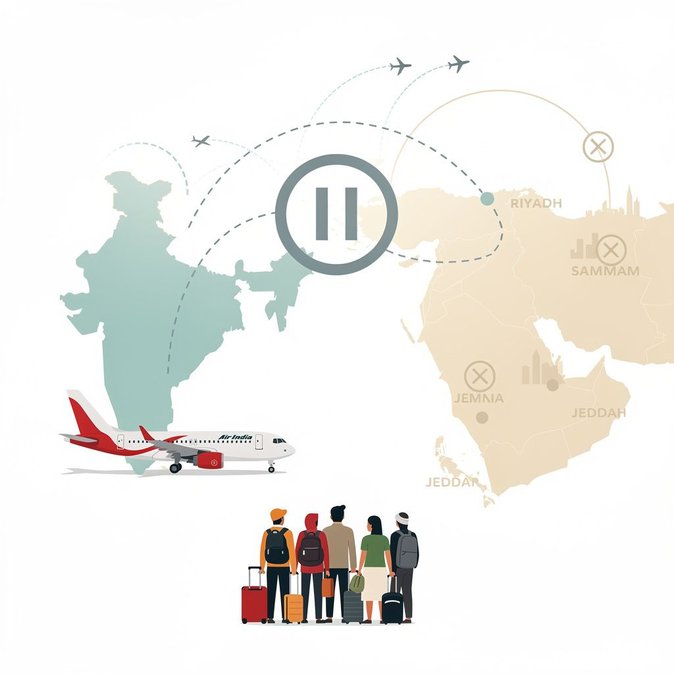
In a statement issued midday on 16 October, Air India said all flights to and from Riyadh, Dammam and Jeddah will remain cancelled through 20 October “in view of the evolving security situation.” The flag-carrier had originally halted services only until 17 October after a Houthi missile damaged airport infrastructure in Riyadh. Passengers booked on the affected routes are eligible for full refunds or re-accommodation once services resume, according to the airline’s commercial policy. Sister carrier Air India Express and private competitors IndiGo and Akasa have announced parallel extensions, effectively severing direct air connectivity between India and Saudi Arabia’s three busiest gateways for at least four more days. The suspension is hitting India’s booming Gulf labour corridor at the height of the festival travel season. Industry analysts estimate that roughly 25,000 passengers per week travel the affected city-pairs, including a significant share of construction and healthcare workers on rotation. Cargo movement of perishables such as seafood from Kerala is also disrupted. Travel managers for multinational firms with Saudi projects should check whether their corporate fares allow rerouting via Doha, Dubai or Manama, all of which currently have capacity constraints. Employers must also factor in additional PCR testing or visa requirements that differ by hub. Insurers, meanwhile, are treating the missile strikes as a named peril, triggering potential claims under standard corporate travel policies.
Source: Business Standard