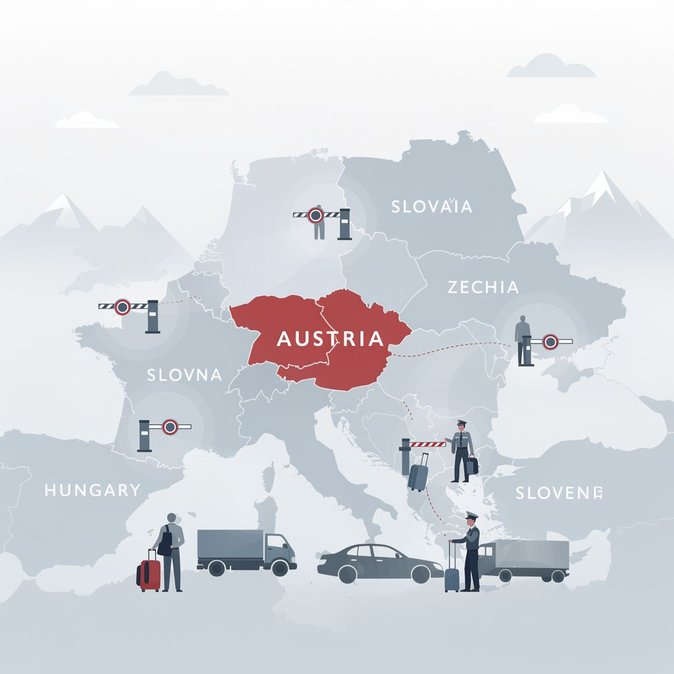
Austria stepped up its diplomatic outreach on border security yesterday, when Interior Minister Gerhard Karner welcomed his Bulgarian counterpart Ivan Demerdzhiev and Kazakh Interior Minister Yerzhan Sadenov to Vienna. During the trilateral talks – the first held in Vienna since Bulgaria joined the Schengen area’s air- and sea-borders segment earlier this year – the ministers reviewed migration trends along the eastern flank of the EU. Karner underlined that Austria’s 2022 veto on Bulgaria’s full Schengen accession had been motivated by record numbers of irregular border crossings detected that year. According to the Interior Ministry, apprehensions at Austria’s border with Hungary fell from some 3,700 in week 41 of 2022 to only two in the same week of 2026, a decline the ministry attributes to Bulgaria’s recent investment in sensors, fencing and mixed border patrols. The three ministers signed a joint declaration pledging to: • expand the existing multinational police contingent deployed to Bulgaria’s external border whenever flows rise above agreed thresholds; • exchange real-time data on smugglers’ routes and forged travel documents through Europol and INTERPOL channels; and • accelerate implementation of a May 2026 bilateral readmission agreement between Austria and Kazakhstan that allows fast transit of returnees through Vienna Airport. For employers that move staff through Vienna, the practical impact will be shorter processing times for forced-return flights and, officials hope, fewer ad-hoc checks at Austria’s land borders if smuggling pressure remains low. However, Karner warned that Austria’s internal controls with Slovakia, Czechia, Hungary and Slovenia will stay in place “until the EU’s external frontier is watertight”. The meeting also touched on digital border technologies. Bulgaria invited Austrian experts to field-test a drone-based surveillance system financed by the EU Border-Management and Visa Instrument, while Kazakhstan showcased its new e-visa analytics platform, offering to share risk indicators with the Austrian Passenger Information Unit. Corporations running project sites in Central Asia could therefore see tighter screening of assignees’ travel histories in the future.
How VisaHQ can help
VisaHQ simplifies the visa application process for individuals and businesses. Check current travel requirements, prepare the required documents and manage your application online through the VisaHQ Austria portal.More From Austria
View all
EU list confirms Austria’s internal border controls with four neighbours will remain until 15 March 2027
Austria extends temporary protection for Ukrainians to March 2028 and restores access to family and childcare allowances