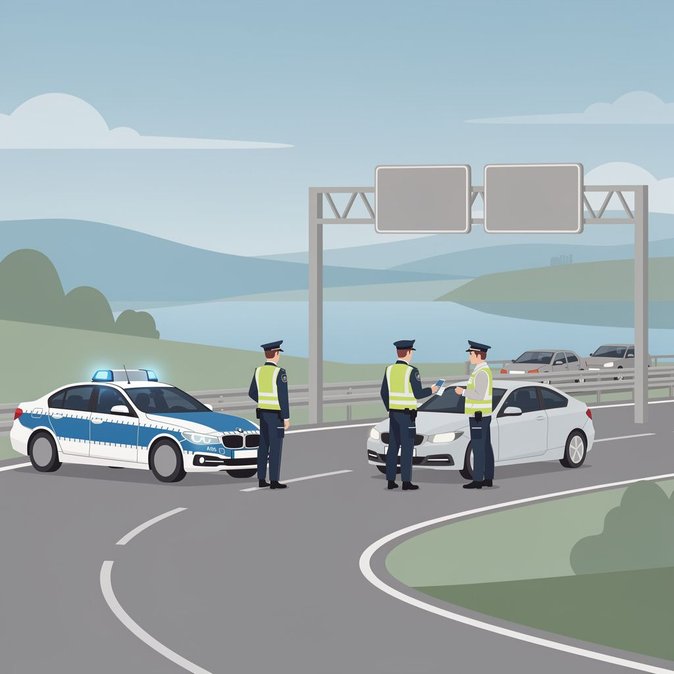
German federal police conducting joint patrols with Bavarian border units at the Lindau-Zech crossing and on the A96 motorway arrested two wanted men over the weekend of 16–17 October. A 33-year-old Ukrainian subject to a German-wide entry ban until 2030 was caught trying to walk into the country; he had been pushed back to Austria only days earlier. A separate stop netted a 25-year-old Romanian sought on an outstanding warrant. The incident underlines how intensified spot checks on the Germany–Austria frontier continue to yield regular arrests nearly four years after Berlin and Vienna first re-introduced internal Schengen controls. Germany renewed its notification to Brussels earlier this month, citing “hybrid threats” and organised-crime risks. Austria maintains parallel controls on its side and frequently intercepts people smugglers along the same corridor. From a mobility perspective, the episode serves as a reminder that EU free movement remains subject to ID verification in this region. Cross-border commuters working for industrial clusters around Bregenz and Lindau should carry passports or national ID cards even on daily trips. Companies transferring Ukrainian nationals should be aware that prior deportations or entry bans in one Schengen state apply Schengen-wide and can trigger immediate detention. While the arrests did not disrupt traffic, they bolster political arguments in both capitals that the controls—currently authorised until 15 March 2027 on the Austrian side—are necessary. Business associations continue to lobby for more predictable, risk-based checks to reduce uncertainty in just-in-time supply chains.
Source: VOL.AT