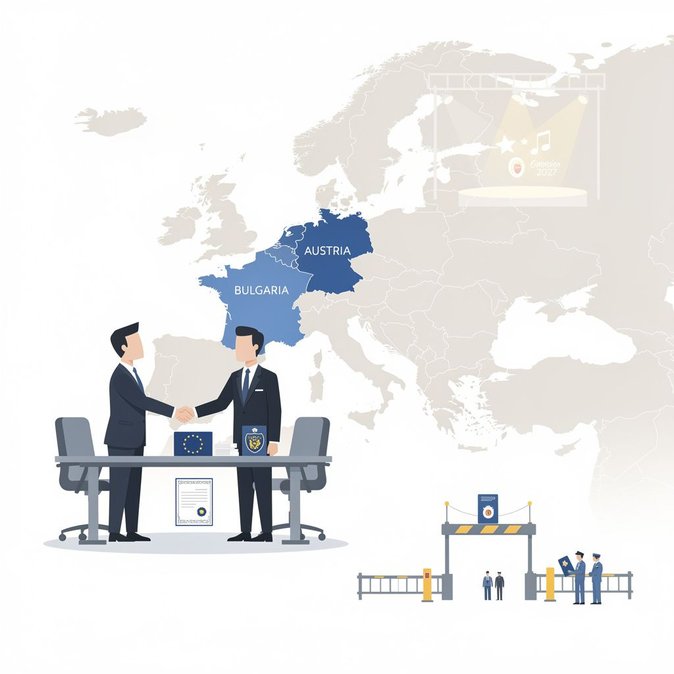
Meeting in Vienna on 19 October 2026, Austrian interior minister Gerhard Karner and his Bulgarian counterpart Ivan Demerdzhiev agreed to intensify operational and legal cooperation on returning irregular migrants from the EU’s external border. The talks come as EU capitals negotiate the final pieces of the Pact on Migration and Asylum, due to apply in mid-2027. Karner praised Bulgaria’s tightened land-border controls, noting that illegal crossings on the Bulgarian-Turkish frontier have fallen from almost 15,000 in October 2022 to ‘at most 30’ so far this month. Vienna sees Sofia as a key partner in reducing secondary movements that push asylum numbers up inside Austria and justify the controversial internal Schengen checks on Austria’s frontiers with Hungary, Slovenia, Czechia and Slovakia. The ministers backed new EU rules that would allow faster refusals or returns at the external border in situations of ‘instrumentalised migration’ and hybrid threats. They also mapped out joint police exercises ahead of the Eurovision Song Contest 2027 in Sofia, focusing on crowd-management and cyber-security. The bilateral agenda further covered last Monday’s bomb alert on an Austrian Airlines flight that landed in Sofia, with Karner thanking Bulgarian forces for their swift action. For mobility managers the message is clear: Austria’s internal border controls—currently authorised until 15 March 2027—are unlikely to disappear soon. Companies moving staff by road between Austria and neighbouring EU states should budget additional time for spot checks and carry robust documentation proving purpose of travel. The meeting also signals that removal operations for rejected asylum seekers may accelerate once the Pact’s crisis regulation is in force, a point that HR teams should incorporate into risk assessments for non-EU assignees. Bulgaria, which remains outside Schengen, hopes that its enhanced border performance will bolster its bid to join the control-free area—a development Austrian businesses have long supported to streamline supply chains into South-East Europe.