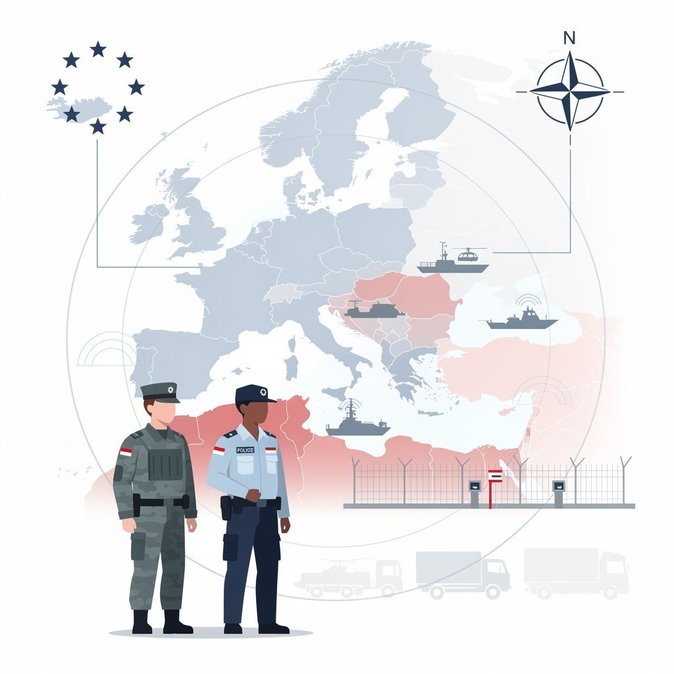
At its 67ᵗʰ session on 21 October 2026, Austria’s Council of Ministers approved a broad package extending troop and police contributions to ten European Union and NATO security operations until the end of 2027. The resolutions cover missions with direct relevance to migration control and border management, including EUFOR ALTHEA in Bosnia-Herzegovina and EUNAVFOR MED IRINI in the Central Mediterranean. Defence Minister Klaudia Tanner said the extensions ensure “continuity of Austria’s engagement in stabilising regions that drive secondary migration into the Schengen area.” Up to 400 soldiers will remain with EUFOR ALTHEA, while the Navy will continue to provide boarding-team specialists to the ASPIDES operation in the Red Sea, tasked with protecting commercial shipping lanes. The Interior Ministry likewise secured cabinet approval to keep Austrian police trainers embedded with EUAM Ukraine and EUBAM Libya, both of which focus on integrated border management and customs risk analysis. The government argues that forward deployment reduces pressure on Austria’s own internal borders, where national police controls with Hungary and Slovenia remain in force until at least March 2027. For global-mobility managers, the decisions mean that Austrian civil servants and contractors on rotation will continue to require special outbound briefings, diplomatic passports and hardship allowances. Families accompanying personnel to Kosovo, Georgia or Armenia will need to plan schooling and health-care arrangements for another year. Logistics firms that support troop movements should note that most deployments are authorised to use Vienna Airport’s military apron for charter flights, with tight turnaround windows. HR teams must also monitor tax equalisation rules, as the extended stints may push some secondees over 183-day thresholds in host jurisdictions.