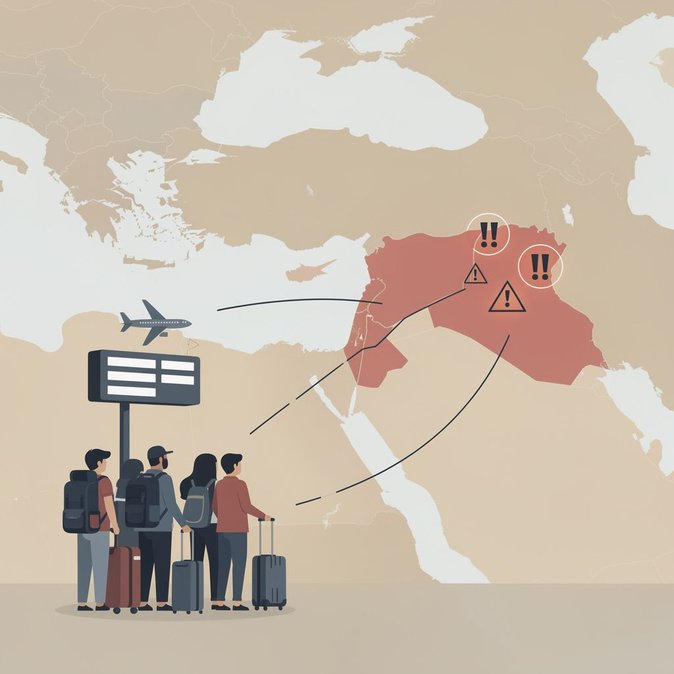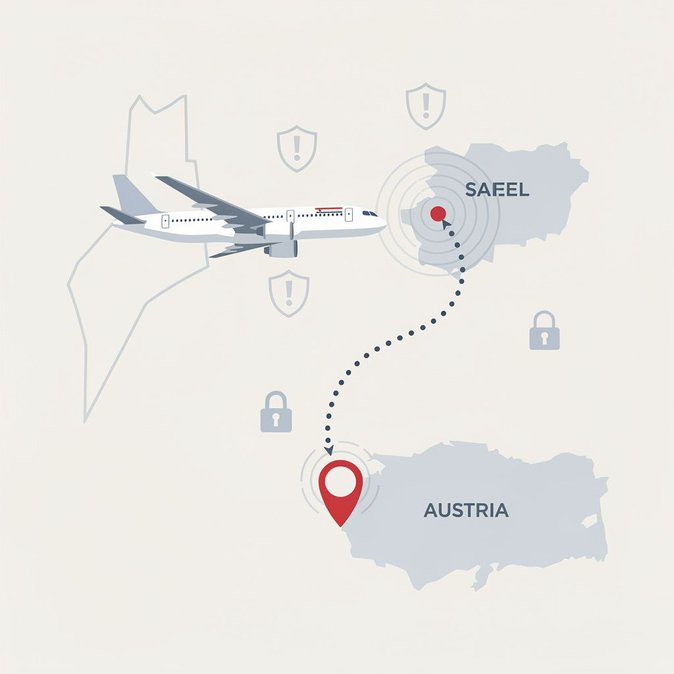
An Austrian Airlines (AUA) Airbus A320 operating flight OS82 from Tel Aviv to Vienna was forced to make an unscheduled landing in Sofia on the evening of 18 October after the carrier received a threat against the aircraft. Vienna-based news portal Vienna.at reported the incident on 21 October, noting that 51 passengers and six crew members were evacuated while Bulgarian authorities searched the jet. No explosives were found, and travellers reached Vienna later that night. Although the event occurred three days earlier, the timing of the coverage coincides with renewed regional security alerts linked to Middle-East tensions. Israel’s Ben-Gurion Airport has seen a spike in threat reports, and several EU carriers now require secondary screening for Tel Aviv departures. Austrian Airlines did not specify the nature of the “threat” but industry sources told local media it was treated as a potential bomb warning, triggering squawk 7700 and a fighter-jet escort into Bulgarian airspace. The diversion underscores the importance of robust crisis-management plans for corporate travel programmes. Mobility managers with staff transiting Vienna hub should verify that traveller profiles include real-time contact data and that employees know airline and embassy emergency hotlines. Companies should also review insurance policies to ensure coverage for trip interruption caused by security diversions. While the incident was resolved without injuries, Vienna International Airport (VIE) has reiterated that, under EU Regulation 300/2008, security levels may be raised without prior notice. Travellers can expect longer screening times on east-bound routes, and carriers may limit cabin baggage on flights originating in the Levant until the alert level is lowered.
Source: Vienna.at