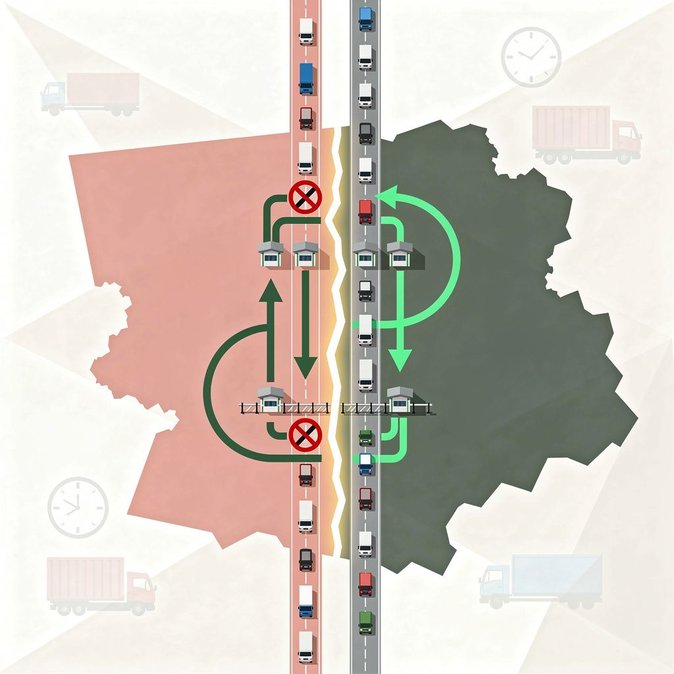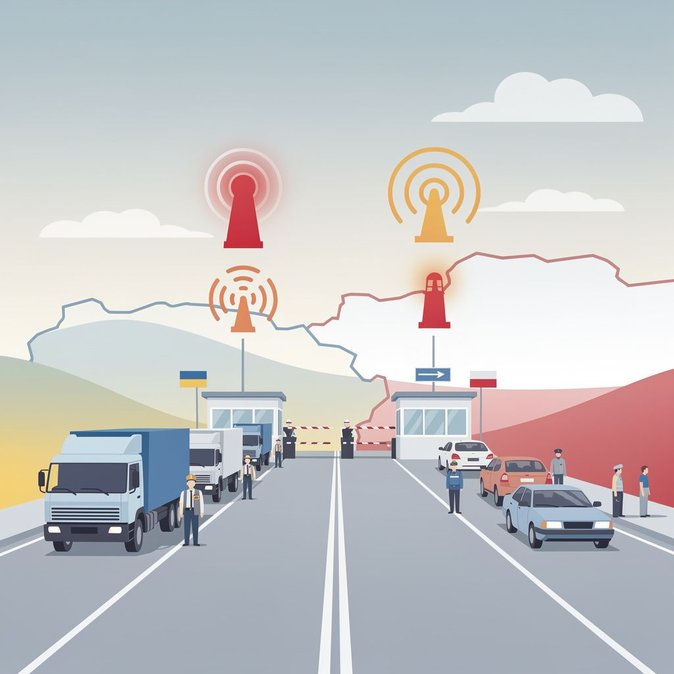
Repeated air-raid alerts in western Ukraine on 21 October 2026 forced several Poland-bound border crossings to halt or slow operations, triggering kilometres-long queues of lorries and private vehicles on both sides of the frontier. According to the Kyiv Post, alerts sounded across Lviv, Volyn and Rivne oblasts shortly after 11 a.m. local time, prompting Ukrainian authorities to suspend processing at the Yagodyn–Dorohusk, Rava-Ruska–Hrebenne and Shehyni–Medyka checkpoints. Polish Border Guard officers kept their booths staffed but could not accept traffic until the alerts cleared, creating a cascading backlog. By early afternoon, live data from Poland’s e-Queue system showed freight waits exceeding 10 hours at Dorohusk and passenger-car delays of more than five hours at Shehyni. Bus services were particularly hard hit because vehicles already lined up in Ukraine could not re-enter the digital queue once the barrier re-opened. Logistics operators moving automotive components from Wrocław to Ukrainian assembly plants reported missed just-in-time windows, while Ukrainian exporters of agrifood goods faced spoilage risks. Security-related stoppages have become more frequent since Russia resumed drone strikes on power infrastructure in western Ukraine in late September. For employers with cross-border staff, the latest incident underscores the importance of contingency planning: remote work arrangements, buffer stock near the border and alternative routes via Slovakia or Hungary can mitigate disruption. Polish authorities reiterated that humanitarian, diplomatic and emergency medical vehicles receive priority clearance once operations resume, but advised ordinary travellers to monitor the Granica.gov.pl portal and the Border Guard’s X/Twitter feed. Companies should remind drivers that fines apply to lorries entering the physical queue without a confirmed e-Ticket. Longer term, Warsaw and Kyiv are discussing technical upgrades—including hardened inspection shelters and encrypted radio links—that would allow limited processing to continue during alert periods. Until then, mobility managers should expect episodic disruptions whenever the regional air-defence system is activated.
Source: Kyiv Post