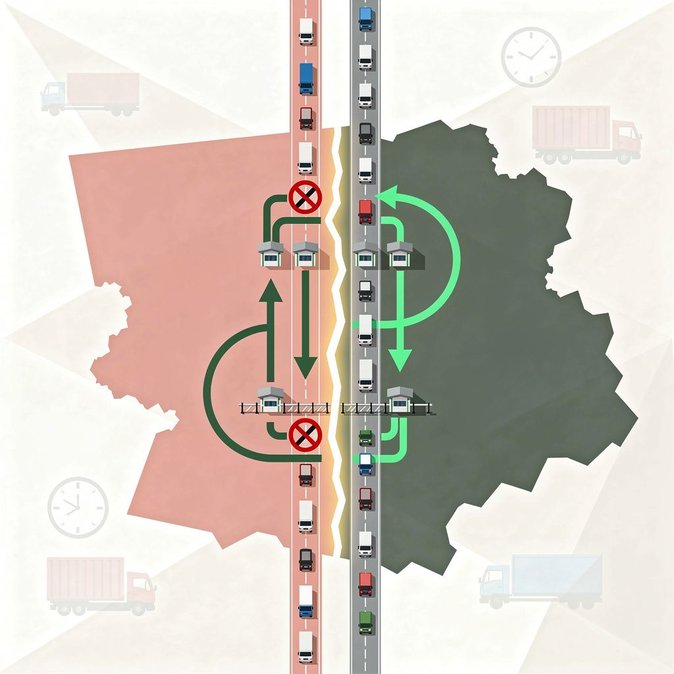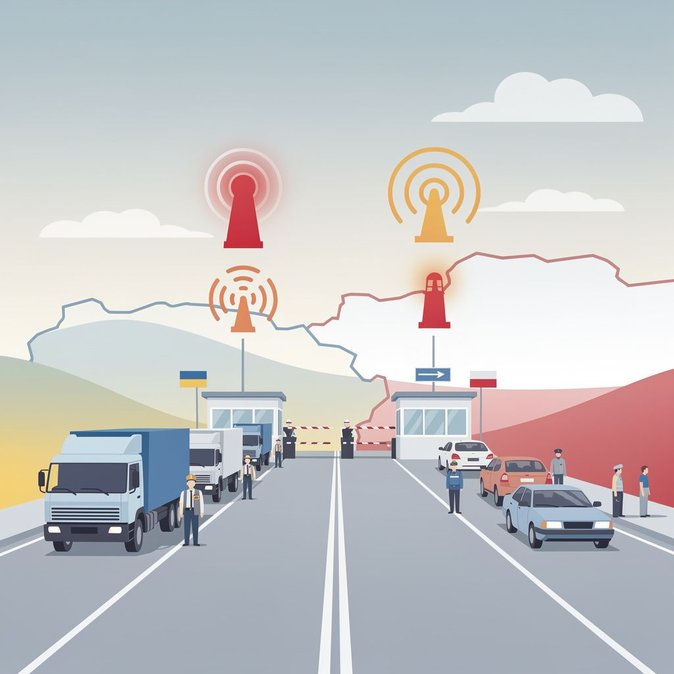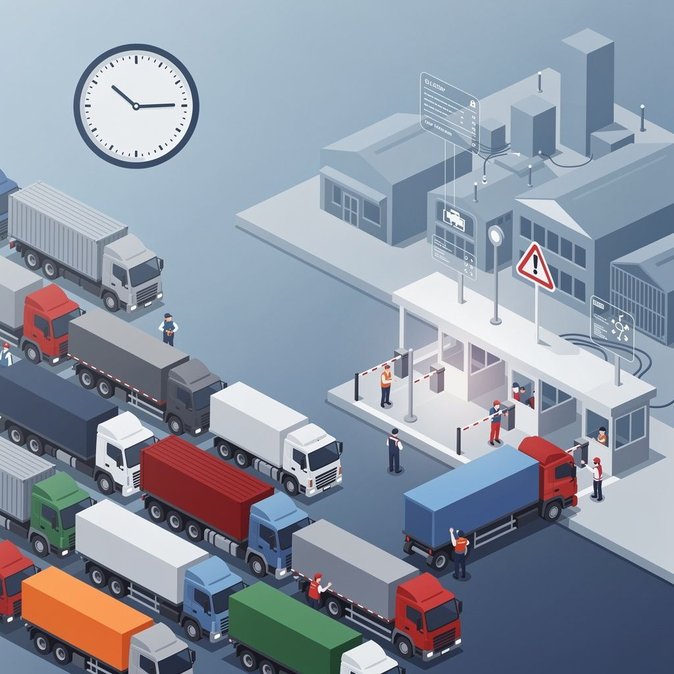
Real-time monitoring service KolejkaNaGranicy.pl reported an unprecedented 151-hour wait time for trucks entering Poland at the Koroszczyn–Kozlovichi crossing with Belarus on the morning of 21 October 2026. The bottleneck, the longest recorded since the site began publishing statistics in 2024, stems from a combination of factors: Belarusian customs system outages, additional Polish phytosanitary inspections on timber loads, and a surge in Christmas-season e-commerce consignments routed through Minsk airport. While Polish exporters shipping east can divert via the smaller Połowiec checkpoint, importers—particularly Polish retailers awaiting consumer electronics assembled in Belarus—have few alternatives. Several Warsaw-based logistics firms chartered rail wagons to move high-value goods through the Brest–Małaszewicze intermodal terminal, but capacity there is also tight due to ongoing track maintenance. Drivers stranded in the queue face rising costs: EU cabotage rules limit the time non-resident truckers can remain in Poland, and per-diem expenses climb quickly when waiting exceeds a week. Employers must also monitor tachograph compliance, as mandatory rest periods become difficult to schedule. Poland’s Border Guard said it had temporarily redeployed staff from the nearby Terespol passenger terminal to accelerate document checks but stressed that Belarusian exit procedures remain the principal choke-point. Industry groups such as the Polish Association of International Road Transport Carriers (ZMPD) are urging Warsaw to request a bilateral meeting under the 2020 Polish-Belarusian Transport Protocol. In the meantime, supply-chain managers should reroute time-sensitive cargo via Lithuania (Kučiai–Budzisk) or use express rail services across the EU-Belarus border, despite higher costs. The incident serves as a stark reminder that geopolitical frictions continue to affect Poland’s eastern gateways, with direct implications for delivery commitments and expatriate assignment logistics.
Source: KolejkaNaGranicy.pl