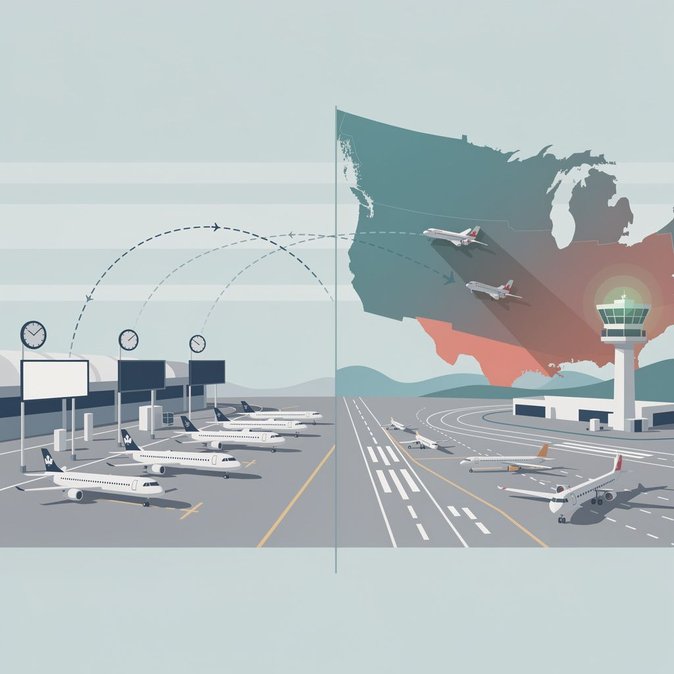
A November 14 national bulletin from Vista Radio warns Canadian travellers to brace for residual delays after the U.S. Federal Aviation Administration (FAA) lifted a six-hour ground stop on November 13. The outage, traced to a fibre-cable replacement at a remote FAA facility, disrupted radar feeds and halted all departures south of the border—knocking airline schedules off balance well into the weekend. Toronto Pearson reported resumed U.S. departures but noted dozens of cancellations and urged passengers to verify flight status online. Vancouver International counted more than 170 delayed or cancelled flights Friday afternoon as trans-border services struggled to re-sequence slots. Air Canada and WestJet both issued flexible rebooking policies covering November 13–15 itineraries for the United States, Mexico, the Caribbean and Costa Rica. Transport Minister Steven MacKinnon confirmed that Nav Canada systems remained stable, and no Canadian airports were directly grounded. Yet because roughly 40 percent of Canada’s international departures enter U.S. airspace, ripple effects are unavoidable. Business travellers with tight Monday-morning meetings in the U.S. are advised to monitor airline apps and consider same-day domestic connections to alternative hubs if delays persist. The incident is a reminder of operational interdependence between Canadian and U.S. air-navigation services. Companies with frequent cross-border travel should review contingency policies—including hotel authorisations and per diem extensions—for employees stranded by external outages. Long-term, the FAA outage will feed calls for redundant routing and data links to insulate Canadian carriers from single-point U.S. failures.
Source: Vista Radio – National News