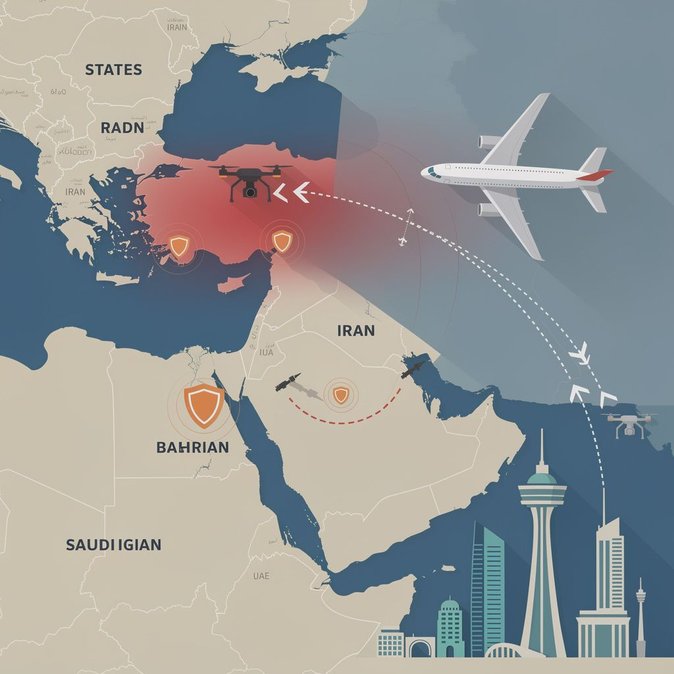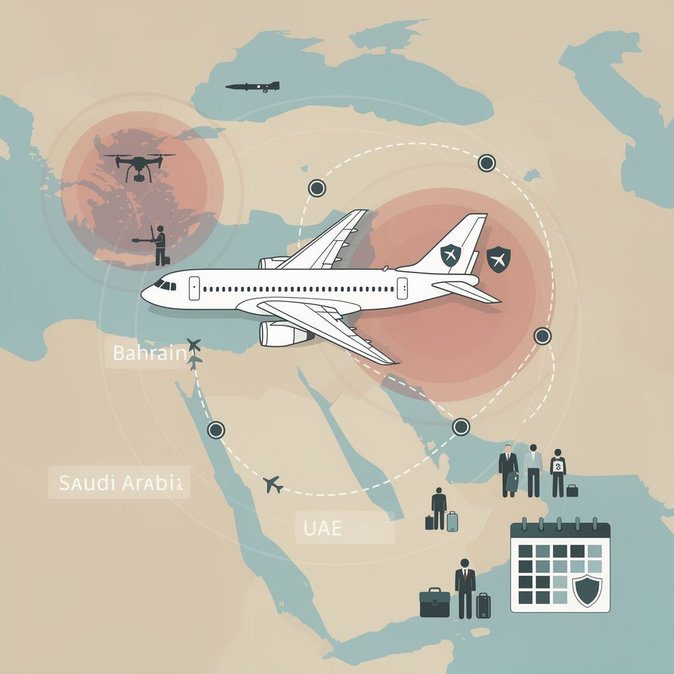
The European Union Aviation Safety Agency (EASA) on 16 November 2026 issued Revision 4 of Conflict-Zone Information Bulletin (CZIB) 2026-07, formally extending the validity of its Persian Gulf and Gulf of Oman warning until 31 January 2027. The update, which specifically names the Emirates FIR (OMAE) alongside Bahraini, Kuwaiti, Qatari and Omani airspace, follows another week of drone and missile activity linked to the continuing United States–Iran confrontation. Although EASA stresses that no new geographical areas have been added, the extra 2½-month window signals the Agency’s assessment that the underlying security risk to civil aviation “remains high”. Operators subject to EU Regulation 965/2012—and all third-country carriers flying to, from or within the EU—are again instructed to avoid over-water portions of the affected FIRs except for arrivals and departures, steer clear of the Gulf of Oman west of 58° E, and maintain robust contingency planning. The bulletin highlights the possibility of mis-identification and unintended engagement arising from the dense concentration of air-defence systems now deployed around strategic Gulf energy assets and US bases. For UAE-based airlines the extension has immediate operational implications. Emirates and flydubai must keep using longer south-east routings to India and the Far East, while Etihad and Air Arabia continue to file tactical flight plans designed to skirt the highest-risk zones without adding unaffordable block-time. Business-aviation and cargo operators face the same constraints, with dispatch teams urged to monitor NOTAM and tactical military activity in real time. Multinational companies with staff transiting Dubai, Abu Dhabi or Sharjah this winter should expect further en-route time and fuel-burn penalties, higher insurance premiums and possible crew-duty knock-on effects. Travel-risk managers are being advised to refresh emergency-response plans, track flight routings proactively and brief travellers on the heightened security environment. EASA will reassess the bulletin in January, but Gulf risk analysts do not expect a full withdrawal until tangible de-escalation is visible—not least because regional missile incidents have now expanded to maritime traffic in the Strait of Hormuz. Until then, the UAE’s aviation hub status will continue to rely on intricate air-traffic choreography to keep both passengers and cargo moving safely.