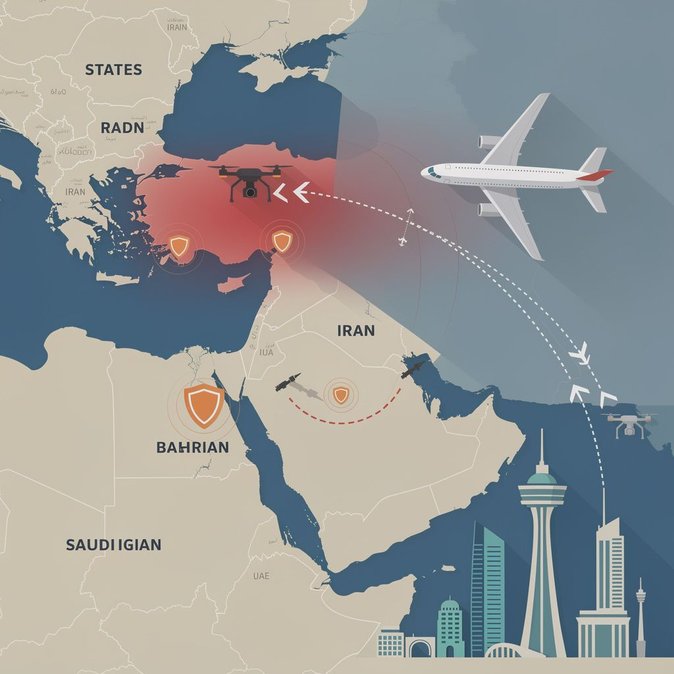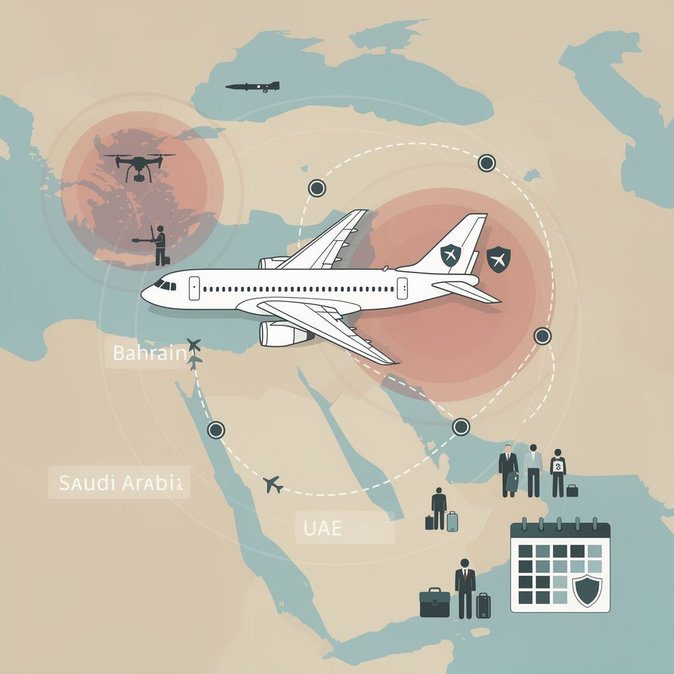
Travellers between the United Arab Emirates and Saudi Arabia woke up on 16 November to another round of cancellations and last-minute timetable changes. Gulf News reports that Etihad Airways has now extended the suspension of its Abu Dhabi–Riyadh and Abu Dhabi–Dammam services through 19 November, while Air Arabia has pulled several Sharjah–Saudi rotations. Emirates and flydubai continue to operate selected flights, but real-time status information for Riyadh and Dammam remains patchy, forcing passengers to verify departures directly with the airlines. The disruptions stem from elevated regional security risks, including Houthi drone and missile fire into Saudi territory and a recent US–Iran naval build-up that has raised the threat profile for civil aviation. Saudi airports have also tightened ground-handling and security procedures, lengthening turn-around times and complicating slot allocation. For UAE-based companies, the Saudi market is the Gulf’s largest source of project work, executive travel and labour flows. Cancelled flights are already delaying contract kick-offs in Riyadh’s IT sector and pushing hospitality groups in the Red Sea project corridor to shift crew changeovers to land crossings via Oman or Kuwait. Freight operators moving spare parts and perishables are booking out remaining belly-cargo space days in advance, driving up spot rates by as much as 18 percent compared with early November. Travel managers should advise staff and assignees to keep mobile numbers updated in airline profiles, use multi-channel alerts (SMS, app and e-mail) and avoid tightly timed connections. Visas remain valid, but overstays caused by flight cancellations can attract automatic fines in Saudi Arabia; HR teams should be ready to file extension requests or reissue electronic entry permits. Looking ahead, industry analysts expect a rolling pattern of cancellations until at least year-end, with near-daily schedule sweeps as security assessments evolve. Organisations with critical Saudi projects might consider block-booking flexible tickets on multiple carriers or routing via Bahrain and Kuwait, which currently show more stable operations.
Source: Gulf News