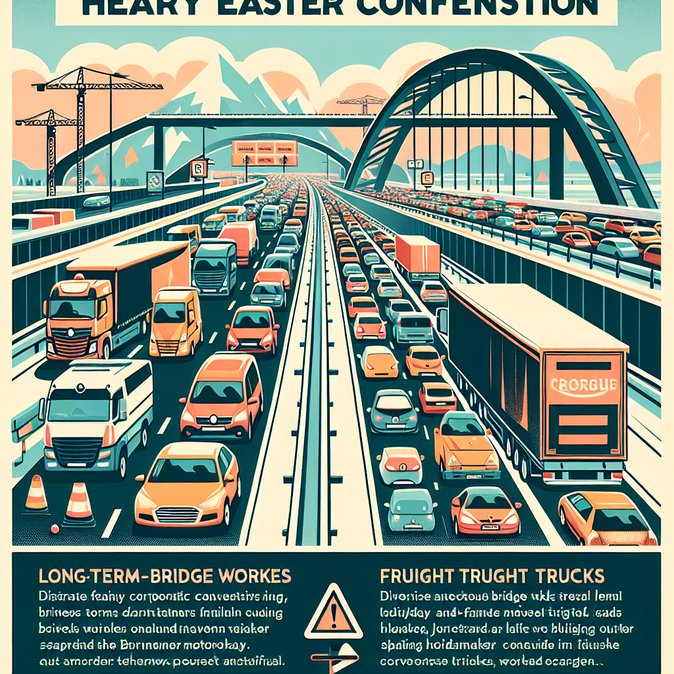
Drivers heading between Austria and Italy this Easter should brace for long delays on the Brenner corridor. In a dispatch posted at 06:20 on 31 March, German travel portal Reisereporter reported significant tailbacks on the A13 Brenner Autobahn around the ageing Lueg Bridge—a notorious choke-point now undergoing a multi-year refurbishment. The Brenner route is Europe’s busiest Alpine crossing, funnelling both holiday traffic and heavy goods vehicles between Germany, Tyrol and northern Italy. According to the article, lane restrictions linked to the bridge renovation will remain in place until at least 2030, with only temporary two-lane openings during peak tourism months. Compounding the problem, Tyrol’s sectoral truck bans and ad-hoc border checks often create rolling shockwaves that reach well into Bavaria. Transport analysts note that chronic congestion on the A13/A22 threatens just-in-time supply chains. Logistics providers relocating staff or equipment through Austria should consider alternative passes such as Reschen or Tauern, though these add distance and face their own weather constraints. Rail remains under-utilised until the 55-kilometre Brenner Base Tunnel opens—now delayed to 2032. Tourism boards fear negative publicity as families drive south for the Easter school break. In response, the Tyrolean police have stepped up real-time traffic apps and variable-message signage. Mobility managers may wish to reroute assignees via Vienna-Verona flights or overnight Nightjet services to Bolzano instead of renting cars across the pass. The report also offers practical tips: travel outside Friday-Sunday peaks, monitor ASFINAG traffic cameras, and be prepared for spot checks at the Italian frontier. Companies with cross-border commuter programmes should circulate the guidance to reduce lost hours and driver fatigue.
Source: Reisereporter