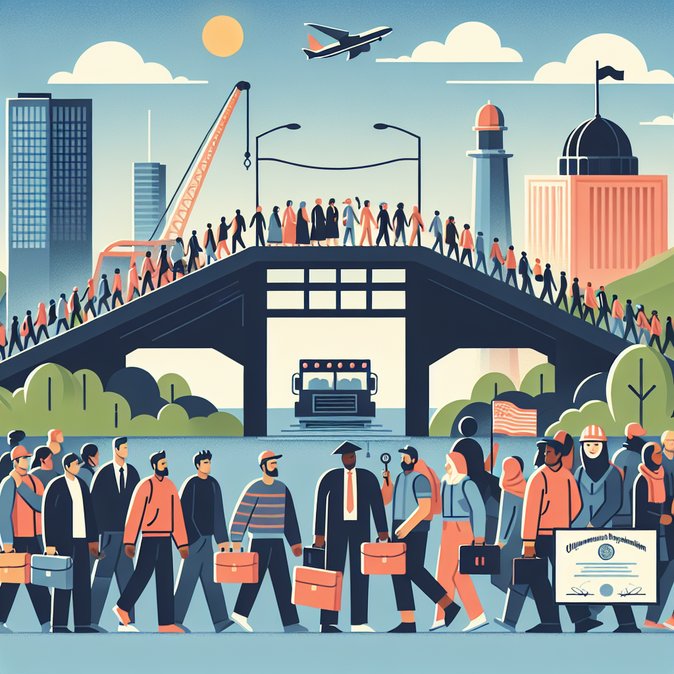
Brazil is home to just over 2 million foreign nationals from 200 different countries, according to the 12ᵗʰ annual report of the Observatório das Migrações Internacionais (OBMigra) released in Brasília and covered by national media on 2 May 2026. The study aggregates data from the Ministry of Justice, labour records and UN agencies, providing the most comprehensive snapshot yet of Brazil’s migrant, refugee and asylum-seeker populations. Venezuelans represent the single largest group, with an estimated 680 000 residents – many of whom are women and children who entered via Roraima under the federal ‘Operação Acolhida’ programme. Haitians, Cubans and Angolans follow. Formal labour-market participation has risen sharply: work-permit holders with signed contracts increased 54 % between 2023 and 2025, reaching 415 000. Nevertheless, 79 % of migrant domestic workers remain informal, and university-educated arrivals often accept low-skill jobs due to diploma-recognition hurdles. The report is the first to align with Brazil’s new National Policy on Migration, Refuge and Statelessness (PNMRA), enacted in late 2025. It recommends a stronger federal-state-municipal financing pact, faster diploma validation, and targeted Portuguese-language programmes to improve socio-economic integration. Without those measures, officials warn, vulnerabilities such as labour exploitation and school-dropout rates could rise even as the country enjoys near-full employment. For employers, the findings highlight a widening pool of available talent but also underscore compliance responsibilities. Companies using foreign labour must ensure proper visa sponsorship, fair-wage alignment and safe-workplace standards; the Labour Ministry has pledged stepped-up inspections in sectors with high migrant concentrations, such as meat-processing in the South. Global mobility teams should note that the government intends to relaunch the long-dormant National Immigration Council to streamline policy implementation. That could accelerate pending rule-changes on digital residency cards and move Brazil closer to the OECD average in work-permit processing times – welcome news for multinationals that rely on quick deployment of specialised staff.
Source: Jovem Pan