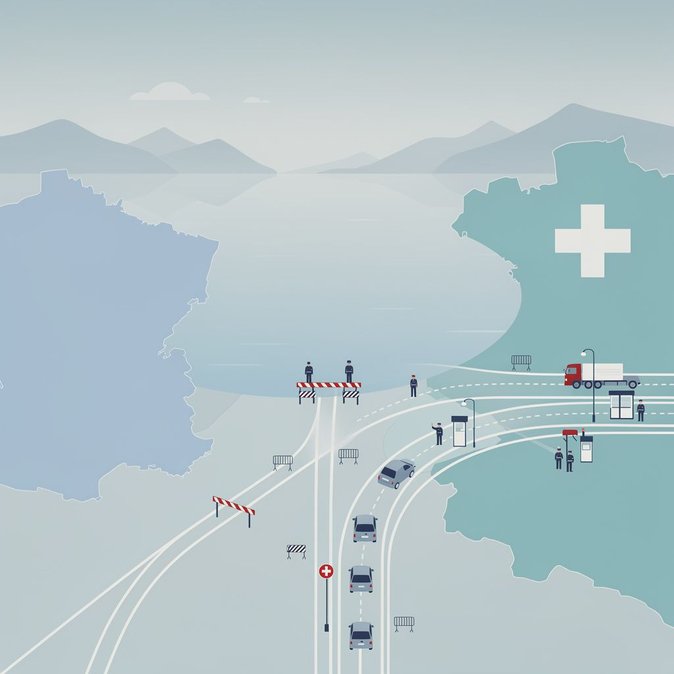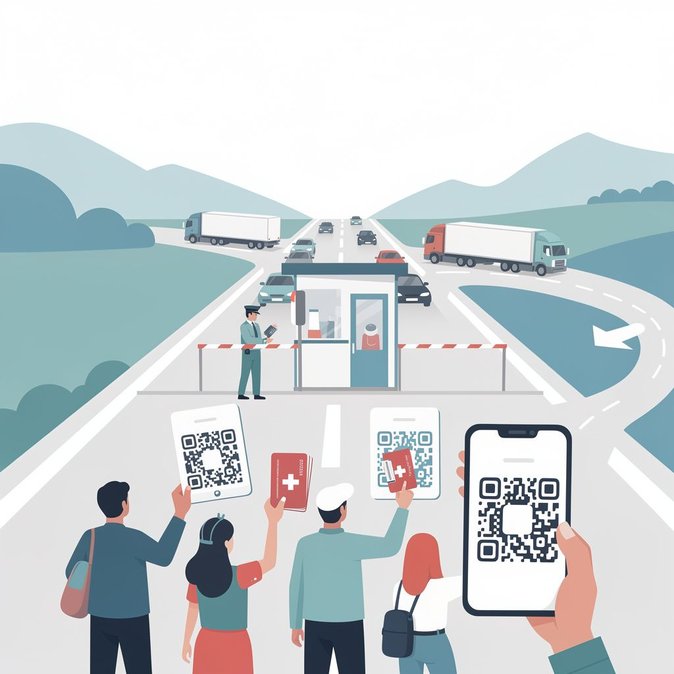
With world leaders descending on Évian-les-Bains for the G7 Summit from 15 to 17 June, Switzerland has reinstated Schengen-internal border checks with France from 10 to 19 June 2026. Only seven of the usual 35 road crossings around Geneva remain open, and travellers must carry passports or national ID cards despite normally passport-free Schengen travel. The Canton of Geneva and the French Haute-Savoie prefecture have set up a mandatory, free “PASS G7” QR code valid from 11 to 17 June for anyone entering the designated “blue zone” around Évian.
Travellers unsure whether their documents are sufficient, or companies needing bulk passport and visa services for staff shuttling between France and Switzerland, can tap VisaHQ’s expertise. The firm’s online platform (https://www.visahq.com/france/) offers quick passport renewal assistance, real-time entry requirement updates and group processing tools—useful peace of mind when ad-hoc border checks like those planned for the G7 are introduced at short notice.
Cross-border workers without the code will be turned back. Airspace over Lake Geneva is restricted, and Geneva Airport warns of possible delays as VIP flights squeeze runway capacity between 13 and 19 June. Corporate mobility teams with staff in the watchmaking, pharma and banking clusters straddling the Franco-Swiss border should advise employees to: (1) download the PASS G7; (2) plan routes via the remaining open crossings at Bardonnex, Ferney-Voltaire, Meyrin, Thônex-Vallard, Perly, Moillesulaz and Anières; and (3) allow extra time for customs inspections. Deliveries may also be rerouted, so logistics managers are mapping alternative freight corridors via the Mont-Blanc Tunnel. French authorities stress that no formal closures are planned on the Doubs or Jura sections of the frontier, but truck traffic is expected to spike there as the A1 motorway southbound in Switzerland shuts from 15 to 17 June. Hotels on both sides of the border report occupancy above 95 percent, complicating last-minute changes to travel itineraries. The summit is France’s biggest security operation of 2026 to date, involving 13,000 police and gendarmes. While disruptions are temporary, companies relying on just-in-time commuting between Geneva and neighbouring French departments should test remote-work contingencies in case queues exceed the forecast 90 minutes at peak times.
Travellers unsure whether their documents are sufficient, or companies needing bulk passport and visa services for staff shuttling between France and Switzerland, can tap VisaHQ’s expertise. The firm’s online platform (https://www.visahq.com/france/) offers quick passport renewal assistance, real-time entry requirement updates and group processing tools—useful peace of mind when ad-hoc border checks like those planned for the G7 are introduced at short notice.
Cross-border workers without the code will be turned back. Airspace over Lake Geneva is restricted, and Geneva Airport warns of possible delays as VIP flights squeeze runway capacity between 13 and 19 June. Corporate mobility teams with staff in the watchmaking, pharma and banking clusters straddling the Franco-Swiss border should advise employees to: (1) download the PASS G7; (2) plan routes via the remaining open crossings at Bardonnex, Ferney-Voltaire, Meyrin, Thônex-Vallard, Perly, Moillesulaz and Anières; and (3) allow extra time for customs inspections. Deliveries may also be rerouted, so logistics managers are mapping alternative freight corridors via the Mont-Blanc Tunnel. French authorities stress that no formal closures are planned on the Doubs or Jura sections of the frontier, but truck traffic is expected to spike there as the A1 motorway southbound in Switzerland shuts from 15 to 17 June. Hotels on both sides of the border report occupancy above 95 percent, complicating last-minute changes to travel itineraries. The summit is France’s biggest security operation of 2026 to date, involving 13,000 police and gendarmes. While disruptions are temporary, companies relying on just-in-time commuting between Geneva and neighbouring French departments should test remote-work contingencies in case queues exceed the forecast 90 minutes at peak times.