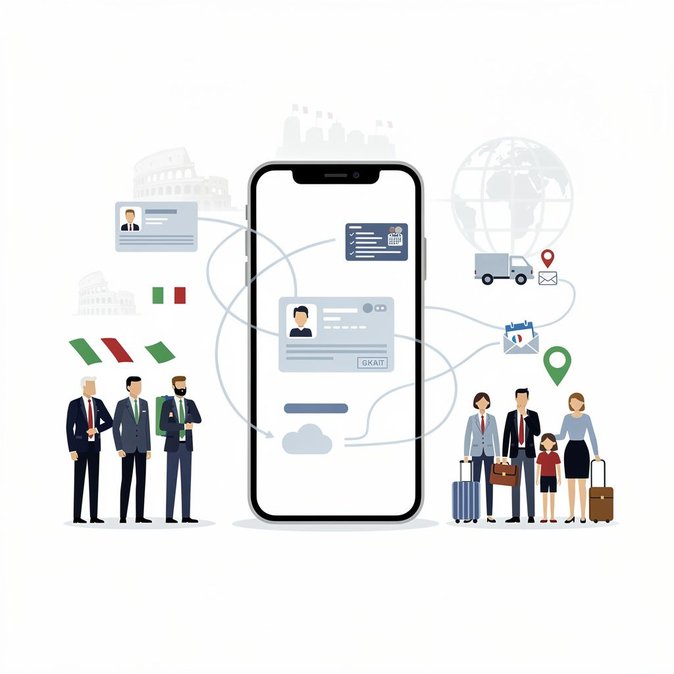
The majestic Sala Conferenze Internazionali at the Farnesina in Rome buzzed with diplomatic chatter this morning as Foreign Minister Antonio Tajani and Interior Minister Matteo Piantedosi opened the two-day Conference of Italian Consuls. It is the first in-person gathering of Italy’s 172 heads of consular posts since before the pandemic and comes at a time when the expatriate community has swelled to more than seven million registered citizens worldwide. Building on the Fast-IT portal—already used by 2.7 million people to renew passports or register births remotely—the Foreign Ministry confirmed that a dedicated mobile app will launch by year-end, enabling biometric passport renewals via smartphone and push-notifications for visa-appointment slots.
Individuals or corporate mobility teams seeking additional support during this digital transition can turn to specialist platforms such as VisaHQ, which already aggregates Italian visa and passport requirements, appointment availability and document checklists in real time. Its Italy hub (https://www.visahq.com/italy/) offers concierge filing, courier hand-offs and automated status alerts that dovetail neatly with the new Fast-IT and AIRE updates, providing a single dashboard for travellers and HR managers alike.
The Interior Ministry is piloting a “one-click AIRE transfer” allowing Italians who relocate within the EU to update residency data without visiting a consulate. In addition, Poste Italiane will deploy secure drop-boxes at 30 embassies so that new electronic identity cards can be delivered by courier instead of in-person collection. For employers running large Italian workforces abroad, these upgrades promise shorter lead times for dependants’ documents and fewer emergency trips to the nearest mission—a perennial budget-drain on mobility programmes. ITA Airways, a conference sponsor, said it will integrate the Fast-IT API into its booking engine so that passengers whose passports are expiring within six months receive a real-time alert and a link to schedule renewal. Beyond tech, the conference debated backlog reduction. Consulates in London and Buenos Aires reported average wait times for citizenship-by-descent appointments of 36 and 28 months respectively. A new “hub-and-spoke” processing model will transfer excess applications from high-volume posts to back-office teams in lower-demand locations such as Riga. Officials also outlined plans to introduce Saturday opening once a quarter in ten ‘mega-missions’ including New York and São Paulo. President Sergio Mattarella, in a message read to delegates, underscored that efficient consular services are a “strategic asset” that buttresses Italy’s economic diplomacy. The take-away for globally mobile citizens and HR departments alike is clear: digital self-service is moving from pilot to production, and the days of dawn queues outside consulates may finally be numbered.

Individuals or corporate mobility teams seeking additional support during this digital transition can turn to specialist platforms such as VisaHQ, which already aggregates Italian visa and passport requirements, appointment availability and document checklists in real time. Its Italy hub (https://www.visahq.com/italy/) offers concierge filing, courier hand-offs and automated status alerts that dovetail neatly with the new Fast-IT and AIRE updates, providing a single dashboard for travellers and HR managers alike.
The Interior Ministry is piloting a “one-click AIRE transfer” allowing Italians who relocate within the EU to update residency data without visiting a consulate. In addition, Poste Italiane will deploy secure drop-boxes at 30 embassies so that new electronic identity cards can be delivered by courier instead of in-person collection. For employers running large Italian workforces abroad, these upgrades promise shorter lead times for dependants’ documents and fewer emergency trips to the nearest mission—a perennial budget-drain on mobility programmes. ITA Airways, a conference sponsor, said it will integrate the Fast-IT API into its booking engine so that passengers whose passports are expiring within six months receive a real-time alert and a link to schedule renewal. Beyond tech, the conference debated backlog reduction. Consulates in London and Buenos Aires reported average wait times for citizenship-by-descent appointments of 36 and 28 months respectively. A new “hub-and-spoke” processing model will transfer excess applications from high-volume posts to back-office teams in lower-demand locations such as Riga. Officials also outlined plans to introduce Saturday opening once a quarter in ten ‘mega-missions’ including New York and São Paulo. President Sergio Mattarella, in a message read to delegates, underscored that efficient consular services are a “strategic asset” that buttresses Italy’s economic diplomacy. The take-away for globally mobile citizens and HR departments alike is clear: digital self-service is moving from pilot to production, and the days of dawn queues outside consulates may finally be numbered.