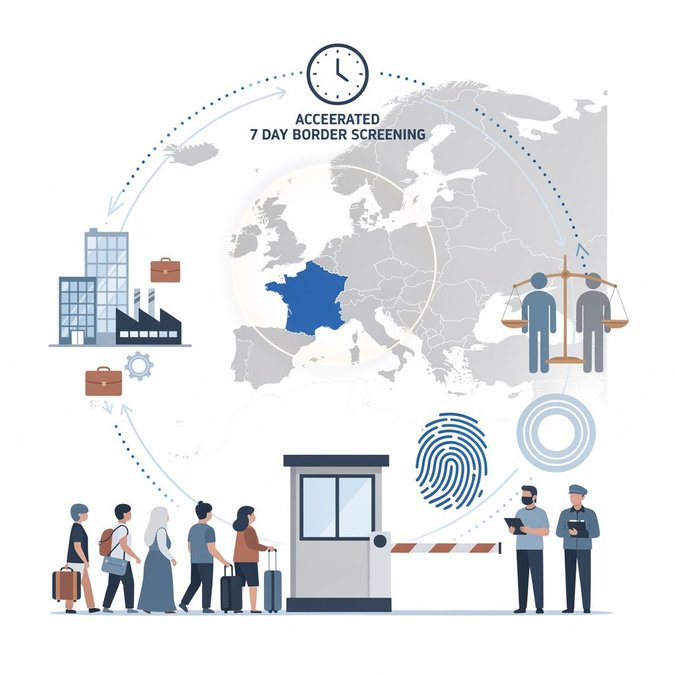
The European Union’s long-awaited Pact on Migration and Asylum formally took effect on 12 June 2026, launching what Brussels calls the most comprehensive rewrite of EU migration rules in two decades. For Belgium, the start date closes a two-year transition period during which national authorities rewrote legislation, trained border-police staff and expanded biometric facilities at Brussels Airport and the country’s external representation posts. Under the new framework, every non-EU national arriving irregularly at the bloc’s external border must undergo a mandatory security, identity and health screening within seven days (three days if already on EU territory). Applicants deemed unlikely to qualify for protection will be channelled into accelerated border procedures with shortened appeal deadlines, while others will be entered into a revamped Eurodac database to prevent “asylum shopping” across member states. Belgium’s Federal Immigration Office (DVZ/Office des Étrangers) has installed additional interview booths and mobile fingerprint scanners at the Gare du Midi arrival centre, but internal audits cited by government sources warn that staff shortages could still create backlogs once summer arrivals peak. Politically, Belgium’s coalition backs the pact’s solidarity mechanism—accepting relocated applicants or paying a financial contribution—but Flemish nationalist party Vlaams Belang has already called for a referendum to opt out, arguing that housing and welfare systems are overstretched. Business groups take the opposite view: the Federation of Belgian Enterprises says predictable rules and faster procedures will help companies recruit needed third-country talent because work-permit issuance can begin earlier in the asylum process. Rights advocates are less sanguine. The Belgian Refugee Council fears that shortened procedural deadlines will limit access to legal aid and interpreters, especially in provincial reception centres. The Council points out that Belgium already faced condemnation from the Brussels Labour Court in 2025 for failing to provide shelter to all asylum seekers; any new bottleneck could trigger fresh litigation and financial penalties. For multinational employers, the immediate takeaway is practical. From this week, all assignees arriving on humanitarian or family-reunification grounds will face stricter identity checks, and companies sponsoring talent under the Single Permit must ensure that biometric enrolment appointments are booked well in advance. Immigration advisers recommend building three to four extra weeks into assignment timelines until Belgian authorities confirm that the new digital systems are fully stable.
Source: EU Today / Euronews