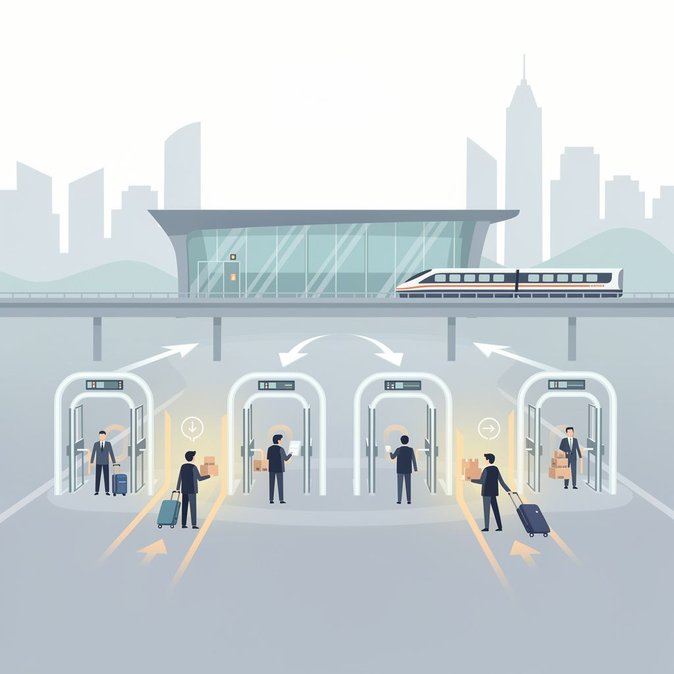
Shenzhen authorities confirmed on 12 June that the brand-new Huanggang Port Passenger Terminal—part of a RMB 40 billion redevelopment of the Futian border district—has entered final commissioning and could open to the public as early as July. Once operational, the facility will replace the ageing 1990s-era terminal and, crucially, restore 24-hour passenger clearance between Hong Kong and the mainland—a service that has been unavailable since Lok Ma Chau Station suspended overnight hours in 2020. For Hong Kong businesses with late-shift staff or time-sensitive cargo that travels with couriers, round-the-clock access is a game-changer. Immigration processing capacity will rise from 50,000 to 200,000 passengers a day, supported by 300 automated e-Channels that interoperate with Hong Kong’s smart-ID system. A new 6.2-km Northern Link rail spur—scheduled for completion by 2034—will plug directly into Hong Kong’s West Rail Line, but in the interim the port will be served by a dedicated cross-border bus plaza and taxi concourse. Huanggang’s redevelopment forms part of the Shenzhen–Hong Kong Cooperation Zone framework, which aims to establish seamless labour mobility and integrated customs procedures. Traders will benefit from a “single-window” declaration system allowing goods under HK$5,000 to clear on a risk-based, post-release audit, while white-list tech professionals will be able to apply for same-day multi-entry permits at the terminal. Security protocols have also been upgraded: departing passengers will undergo combined customs-immigration-quarantine (CIQ) inspection in a single hall, with advanced CT scanners able to detect battery packs and controlled medicines without unpacking. Travellers carrying live seafood and agricultural samples—common among e-commerce merchants—will find newly installed fast-track counters staffed jointly by Hong Kong and Shenzhen food-safety officers. For mobility planners, the July opening provides another capacity valve during the forthcoming National Day ‘golden-week’ boom, when the Lo Wu and Lok Ma Chau Spur Line crossings routinely exceed 100 percent utilisation. Corporations should revisit their employee travel policies to reflect the extended operating hours and the new “joint inspection, one-stop release” model, which shortens average clearance time to eight minutes.
Source: TVB News