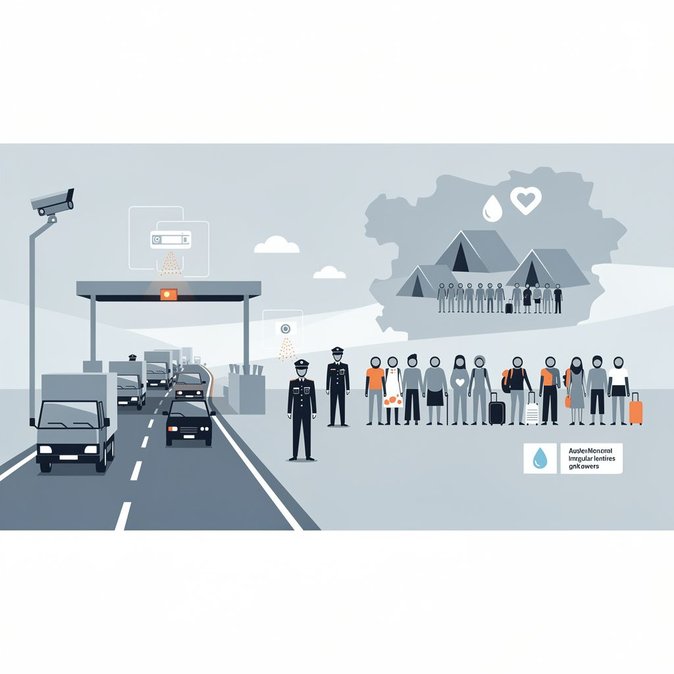
Austrian authorities confirmed on 13 June 2026 that internal border controls with Czechia, Slovakia, Hungary and Slovenia will remain in place until mid-September, citing “continued security needs.” The announcement came only a week after the European Commission formally advised nine Schengen countries to set clear end-dates for long-standing checks and rely instead on cross-border police cooperation. Interior Minister Gerhard Karner defended the decision, arguing that the EU’s newly effective asylum pact still leaves loopholes that smugglers can exploit. He emphasised that Austria’s controls are now risk-based and supplemented by technology, rather than blanket stoppages at every crossing. Karner’s comments highlight a widening policy rift between Vienna and Brussels over how quickly normal passport-free travel should be restored inside the bloc. For travel managers, the extension means that staff driving between Austrian and Central-European production sites must continue to carry identification and, where applicable, residence or work permits. Logistics operators report that ad-hoc inspections typically add five to ten minutes on the busy A5 (Mikulov) and A4 (Nickelsdorf) corridors, but longer tailbacks occur during peak holiday weekends. Law firms note that repeated extensions may invite challenges at the European Court of Justice, which in several rulings has limited the cumulative duration of “temporary” internal controls. Companies with high cross-border mobility volumes should monitor litigation closely: a sudden court-ordered suspension would require immediate operational adjustments. Diplomatically, Austria’s stance could also affect its leverage in upcoming negotiations on Schengen enlargement for Bulgaria and Romania, where unanimous approval is needed. Business chambers warn that prolonged fragmentation of the Schengen area undermines Europe’s competitiveness and complicates workforce planning in border regions.
Source: ORF.at