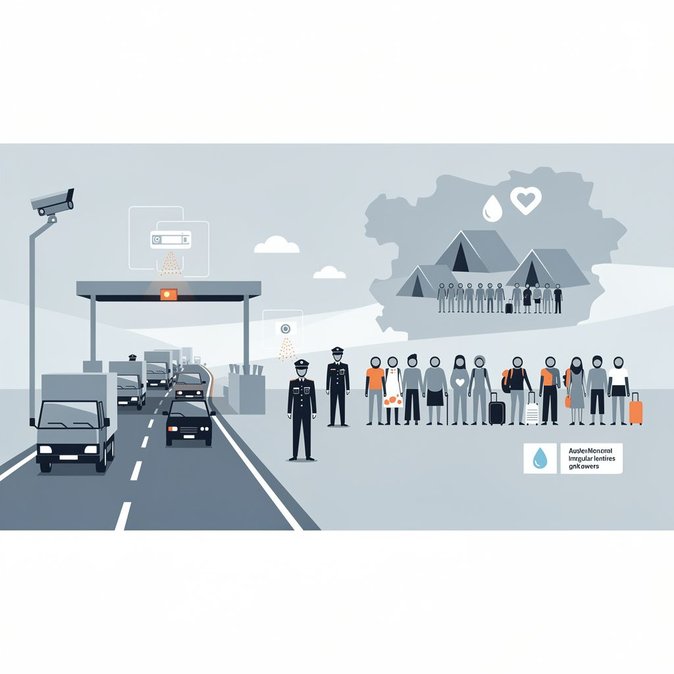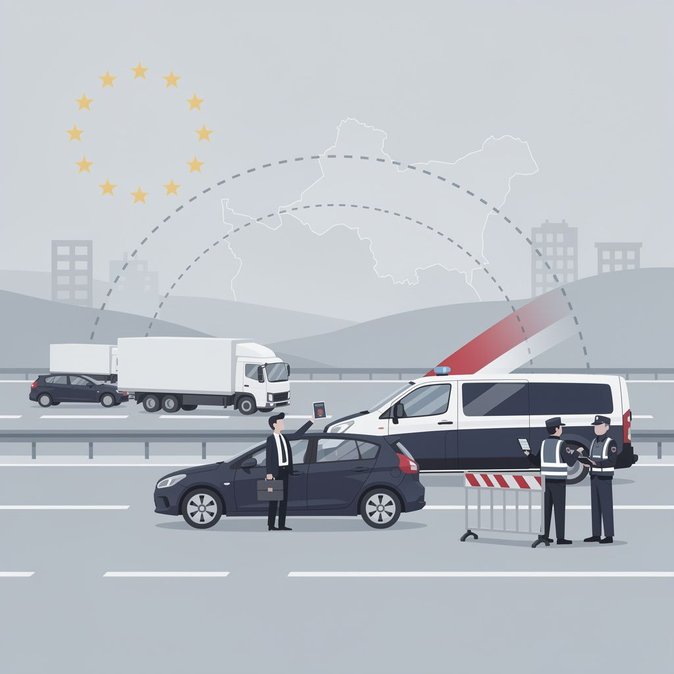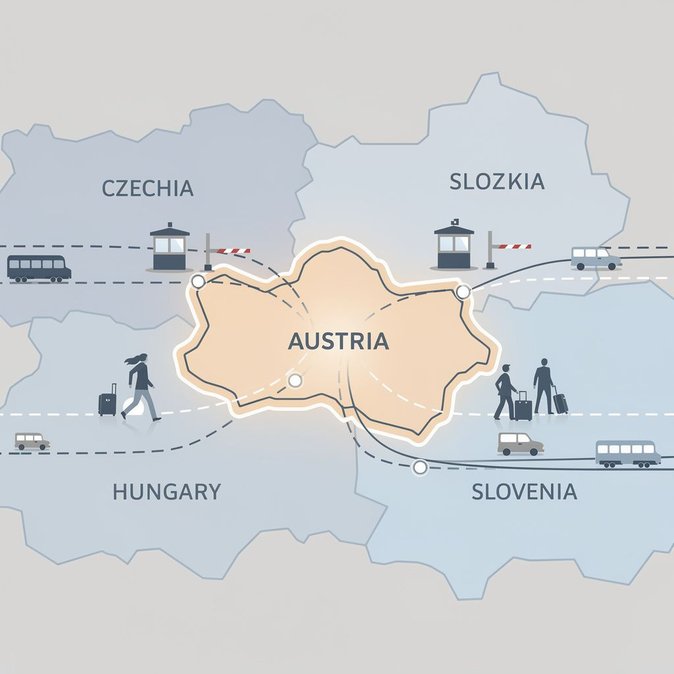
Austria’s federal government has issued a new ordinance that prolongs the existing “Grenzraumkontrollen” (border-zone controls) on Austria’s land frontiers with Czechia, Slovakia, Hungary and Slovenia until 15 September 2026. The measure, published on Sunday, 14 June, and entering into force at midnight on Monday, is the eighth consecutive extension since the controls were re-introduced in 2023 to curb irregular secondary movements along the so-called Balkan route. Interior Minister Gerhard Karner said the extension is necessary “until the European Union’s external border protection is fully operational,” adding that Austria will continue to rely on a “broad, flexible control belt instead of purely static checkpoints.” Under the flexible model, mobile patrols and automatic number-plate recognition systems are deployed up to 30 km inside Austrian territory, while soldiers from the Federal Army support police in roadside inspections. According to the Ministry of the Interior, the strategy has reduced detected people-smuggling cases by 64 % in the first five months of 2026 compared with the same period last year. Regular commuters are promised shorter waiting times because controls can be shifted in real time to reflect risk assessments and traffic volumes. The decision comes despite a 5 June non-binding recommendation from the European Commission that urged nine Schengen member states—including Austria—to prepare a roadmap for phasing out long-running internal border checks. Brussels argues that the new EU Asylum and Migration Pact, which took effect on 13 June, together with the upcoming Entry/Exit System, will give member states stronger tools to manage irregular migration without disrupting free movement. Vienna counters that the external border systems “will take months to stabilise” and that Austria remains under disproportionate pressure because of its geographic position in the heart of Europe. For multinational companies, the extension means that cross-border business travellers and freight operators on the busy North-South corridors (D2/A5, D1/A6 and A2/A9) should continue to budget extra time for possible spot checks. Carriers should brief drivers to carry passports or national ID cards even on routine trips. Employers with frontier-workers from the affected neighbouring states should remind staff to keep residence permits and proof-of-employment handy to avoid delays. In practical terms, travellers report that wait times remain modest—typically under 10 minutes outside peak holiday weekends—but delays can spike when mixed trains arriving from Hungary or Slovenia are screened. Companies planning incentive travel or conferences that involve coach transport across these borders may want to schedule buffer time or use direct flights to Vienna, Graz or Linz instead of overland transfers.
Source: ORF.at