For years U.S. dairy producers have struggled to access the H-2A seasonal-worker program because cows require year-round care—making it hard to prove ‘temporary need.’
For mobility managers seeking to capitalize on this shift, VisaHQ can streamline the consular stage of the H-2A process by arranging embassy appointments, checking document completeness, and handling courier logistics for inbound workers; details are available at https://www.visahq.com/united-states/
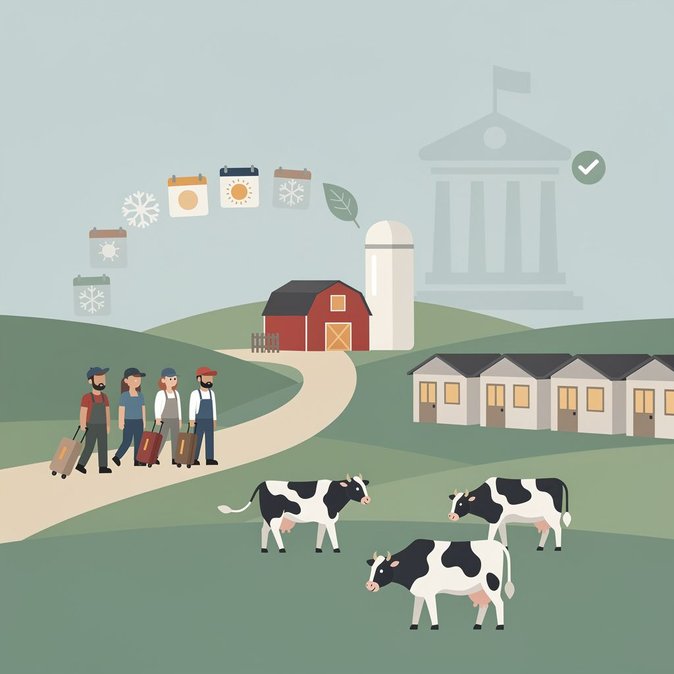
On 19 June DHS released a policy memorandum stating that dairies can, in fact, demonstrate seasonal spikes (e.g., calving cycles) and file multiple petitions of up to ten months each. USCIS will now adjudicate dairy H-2A petitions case-by-case, considering factors such as breeding seasonality, weather-driven feed cycles and production surges tied to school-milk demand. The Department of Labor welcomed the guidance and published examples of acceptable Temporary Labor Certification narratives. The National Milk Producers Federation called the memo “a breakthrough,” estimating that up to 8,000 positions could be filled under H-2A in the next 12 months. For mobility teams at agribusiness conglomerates, the announcement offers a lawful alternative to unauthorized-worker risk and reduces reliance on the H-2B cap, which dairy employers have tried to use in recent years with mixed success. Legal advisers caution that petitions must still document recruitment of U.S. workers and provide free housing—a cost many dairies will need to budget for.
For mobility managers seeking to capitalize on this shift, VisaHQ can streamline the consular stage of the H-2A process by arranging embassy appointments, checking document completeness, and handling courier logistics for inbound workers; details are available at https://www.visahq.com/united-states/
On 19 June DHS released a policy memorandum stating that dairies can, in fact, demonstrate seasonal spikes (e.g., calving cycles) and file multiple petitions of up to ten months each. USCIS will now adjudicate dairy H-2A petitions case-by-case, considering factors such as breeding seasonality, weather-driven feed cycles and production surges tied to school-milk demand. The Department of Labor welcomed the guidance and published examples of acceptable Temporary Labor Certification narratives. The National Milk Producers Federation called the memo “a breakthrough,” estimating that up to 8,000 positions could be filled under H-2A in the next 12 months. For mobility teams at agribusiness conglomerates, the announcement offers a lawful alternative to unauthorized-worker risk and reduces reliance on the H-2B cap, which dairy employers have tried to use in recent years with mixed success. Legal advisers caution that petitions must still document recruitment of U.S. workers and provide free housing—a cost many dairies will need to budget for.