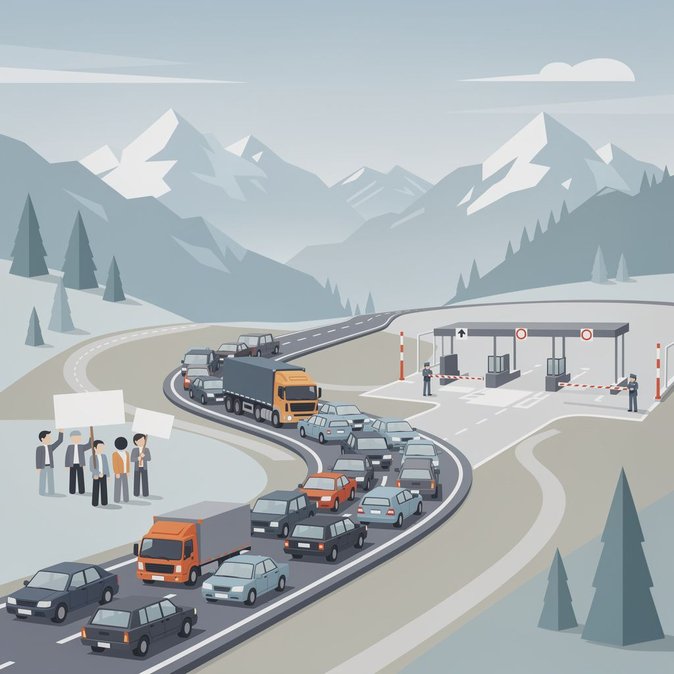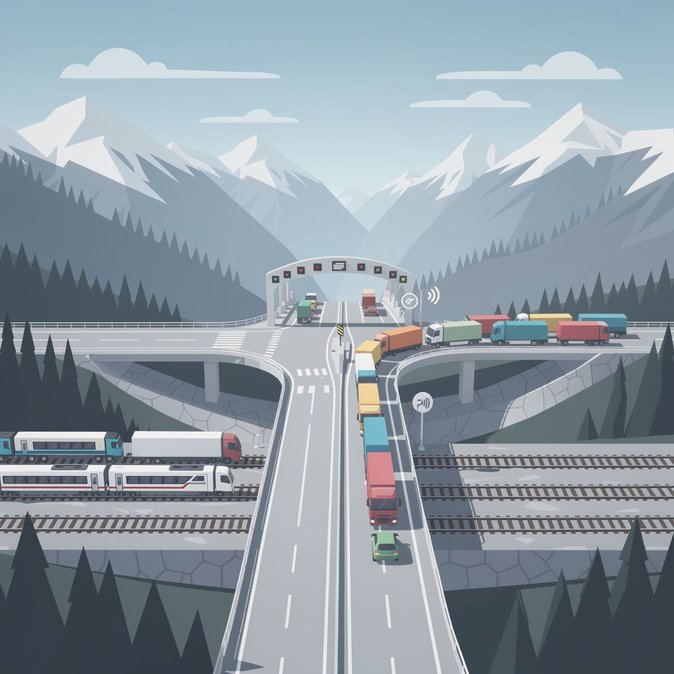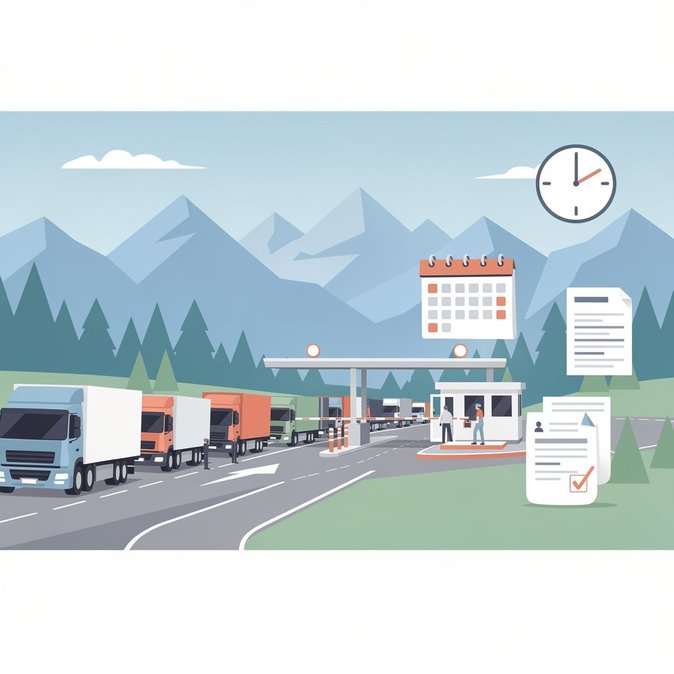
Motorists approaching the Austrian border on Germany’s A93 faced stop-and-go conditions on 24 June as Tyrol implemented another morning of Lkw-Blockabfertigung, limiting heavy-goods traffic into the Inntal. Reporting by Reisereporter at 06:10 shows queues building more than ten kilometres north of Kiefersfelden, with knock-on effects reaching the A8 Inntaldreieck. The block-release system, introduced in 2019 to protect the A12 corridor from pollution and congestion, allows only 250–300 trucks per hour to cross from Germany. While effective in keeping the Inn valley fluid, the measure shifts waiting time and emissions onto Bavarian soil, frustrating German hauliers and local residents. For companies running time-critical shipments between Munich and Eastern Europe, missing the green phase can mean delays of up to three hours and breaching EU driver-hour rules. Passenger vehicles are not formally restricted, yet they share narrowed lanes with idling lorries and frequently encounter spontaneous passport checks linked to Austria’s temporary Schengen derogation. Mobility managers moving staff to Tyrolean plants or ski resorts should warn travellers to carry physical passports rather than relying solely on national ID cards to speed inspections. The Tyrolean government has published its 2026 block-release calendar through October; notable peak days include 1 July, 8 August and several Fridays preceding Italian public holidays. Logistics planners are advised to pre-clear customs documentation electronically, re-sequence loading times to late evening, or reroute via Salzburg’s Walserberg if payloads allow. Looking forward, Vienna and Berlin continue to negotiate a long-term bilateral solution that would pair tighter Euro-6 truck quotas with incentives for rail rolling-highway use.
Source: Reisereporter