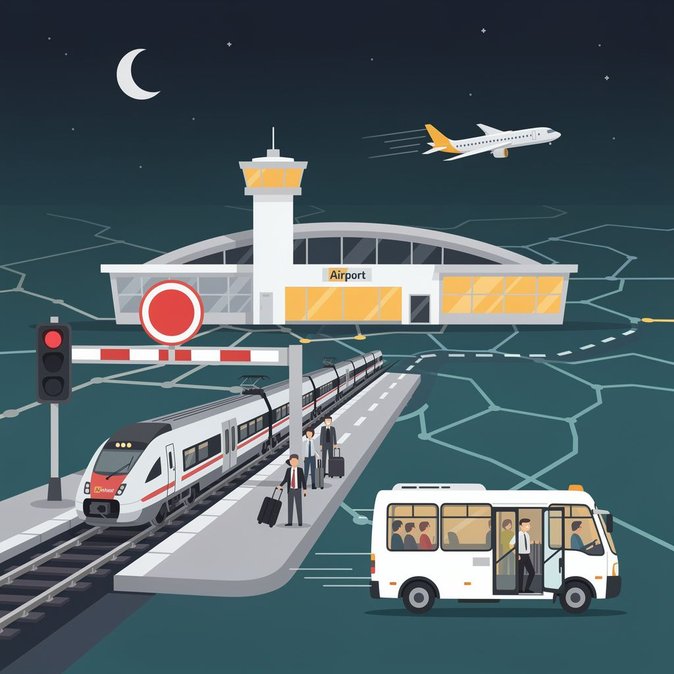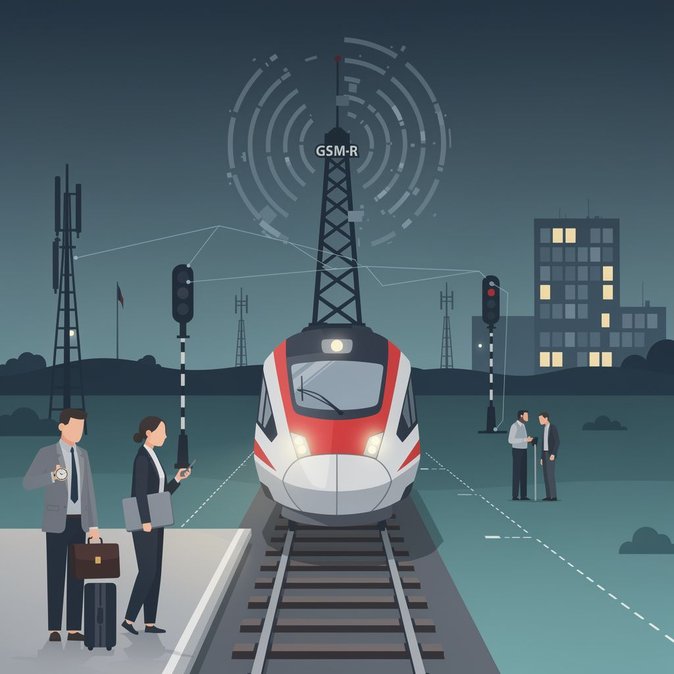
Late on 23 June an unexpected blackout in Deutsche Bahn’s GSM-R digital radio system forced the operator to halt every long-distance, regional and S-Bahn service in Germany for almost two hours. Trains already en-route were ordered to stop at the next station; those still in depots were held back. The disruption was felt well into 24 June as crews and rolling stock were out of position, causing knock-on delays and cancellations that frustrated commuters and business travellers during the morning peak.
GSM-R is the secure voice/data network that connects drivers with control centres and activates trackside equipment such as points and signals. According to DB, a central software component crashed and had to be rebooted nationwide – a procedure that exposed the vulnerability of having a single point of failure in critical transport infrastructure. Federal transport minister Volker Wissing has demanded an incident report and asked the Federal Railway Authority (EBA) to review DB’s redundancy concept.
Business travellers heading to or through Germany should also ensure their documentation is in order should unplanned re-routing via neighbouring countries become necessary. VisaHQ’s online platform can quickly arrange German or wider Schengen visas, helping companies keep itineraries flexible when rail networks suffer unexpected shutdowns. Details are available at https://www.visahq.com/germany/
The outage coincides with DB’s multi-billion-euro “Generationenprojekt Hochleistungskorridore”, under which key corridors will be completely closed for refurbishment in 2026-2030. Industry groups warn that customers’ tolerance for disruption is thin and that DB must prove the network is reliable before asking companies to shift freight from road to rail to meet climate targets.
For corporate travel managers the episode underlines the need for contingency planning: dozens of ICE connections were cancelled overnight, stranding delegates headed for trade fairs in Cologne and Munich. Many firms reverted to car sharing or last-minute domestic flights – options that are both costlier and less sustainable. Travel-risk specialists recommend that companies build rail disruption alerts into their mobility platforms and pre-authorise alternative modes when critical meetings are at stake.
GSM-R is the secure voice/data network that connects drivers with control centres and activates trackside equipment such as points and signals. According to DB, a central software component crashed and had to be rebooted nationwide – a procedure that exposed the vulnerability of having a single point of failure in critical transport infrastructure. Federal transport minister Volker Wissing has demanded an incident report and asked the Federal Railway Authority (EBA) to review DB’s redundancy concept.
Business travellers heading to or through Germany should also ensure their documentation is in order should unplanned re-routing via neighbouring countries become necessary. VisaHQ’s online platform can quickly arrange German or wider Schengen visas, helping companies keep itineraries flexible when rail networks suffer unexpected shutdowns. Details are available at https://www.visahq.com/germany/
The outage coincides with DB’s multi-billion-euro “Generationenprojekt Hochleistungskorridore”, under which key corridors will be completely closed for refurbishment in 2026-2030. Industry groups warn that customers’ tolerance for disruption is thin and that DB must prove the network is reliable before asking companies to shift freight from road to rail to meet climate targets.
For corporate travel managers the episode underlines the need for contingency planning: dozens of ICE connections were cancelled overnight, stranding delegates headed for trade fairs in Cologne and Munich. Many firms reverted to car sharing or last-minute domestic flights – options that are both costlier and less sustainable. Travel-risk specialists recommend that companies build rail disruption alerts into their mobility platforms and pre-authorise alternative modes when critical meetings are at stake.