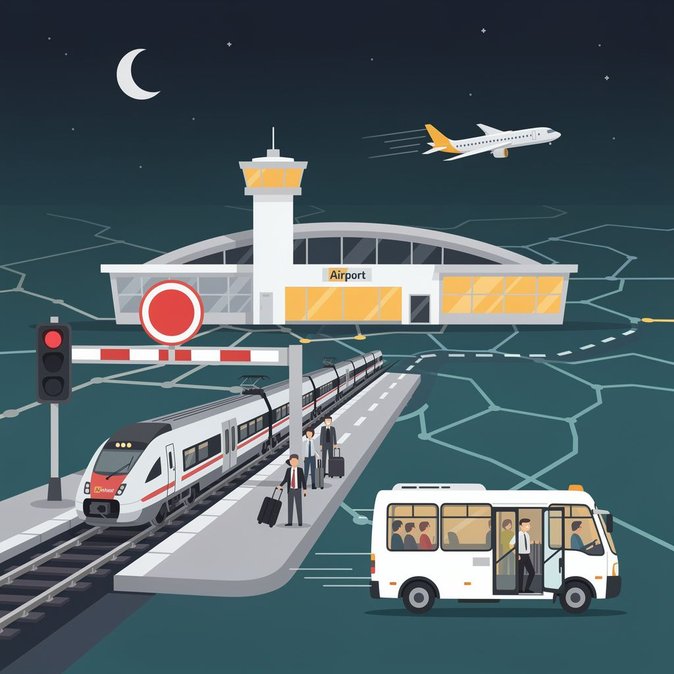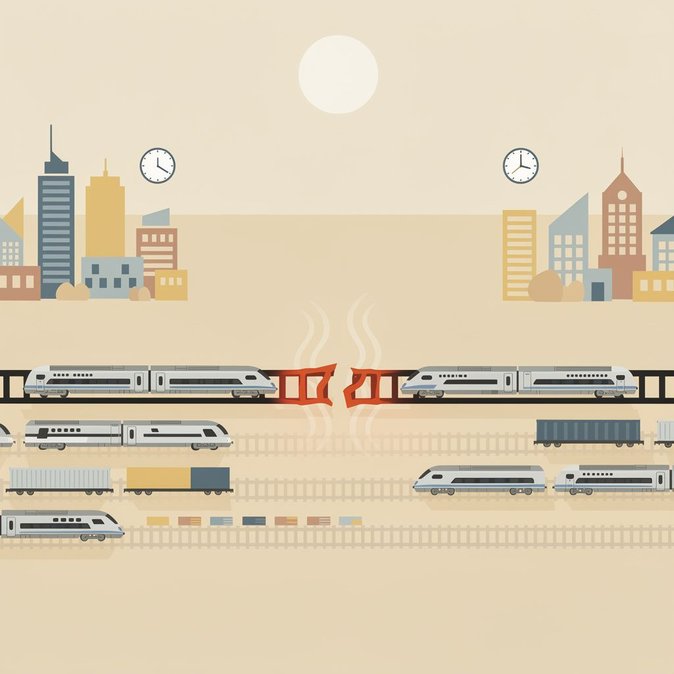
Deutsche Bahn confirmed on 25 June that the strategic Hannover–Hamburg line, closed in sections since 1 May for track-renewal and signalling upgrades, will remain blocked until at least 4 July after construction crews discovered heat-related rail damage. Long-distance ICE and IC services are being diverted via Uelzen-Stendal, adding up to 45 minutes to journey times, while regional operator Metronom runs a rail-replacement bus (SEV) between Celle and Lüneburg.
International passengers facing unexpected itinerary changes because of the closure may also need to adjust visa plans at short notice. VisaHQ can expedite German and onward-destination visa applications through its easy online portal (https://www.visahq.com/germany/), helping travellers avoid additional disruption when rail delays threaten connecting flights.
The corridor carries roughly 30 percent of all north–south freight in Germany; logistics companies report capacity bottlenecks at alternative marshalling yards in Maschen and Seelze. With the nationwide GSM-R outage only just resolved, shippers warn of cascading delays that could push intermodal customers back to road transport. DB Cargo says it is prioritising time-critical automotive and fresh-produce trains. For business travellers the diversion means tighter connection windows at Hannover Hbf and reduced seat availability on peak-hour ICEs. Travel managers should update rail-policy advisories and consider booking contingency hotel nights for staff with onward flights from Hamburg Airport. The closure is part of DB’s pilot ‘Generalsanierung’ model, where entire corridors are taken out of service for a few weeks rather than years of weekend work. While the concept promises quicker results, the current heat-induced extension exposes how climate factors can derail even concentrated project timelines. Stakeholders are calling for more transparent risk buffers in DB’s 2027 schedule, when the busy Frankfurt–Mannheim corridor is next in line for a full shut-down.
International passengers facing unexpected itinerary changes because of the closure may also need to adjust visa plans at short notice. VisaHQ can expedite German and onward-destination visa applications through its easy online portal (https://www.visahq.com/germany/), helping travellers avoid additional disruption when rail delays threaten connecting flights.
The corridor carries roughly 30 percent of all north–south freight in Germany; logistics companies report capacity bottlenecks at alternative marshalling yards in Maschen and Seelze. With the nationwide GSM-R outage only just resolved, shippers warn of cascading delays that could push intermodal customers back to road transport. DB Cargo says it is prioritising time-critical automotive and fresh-produce trains. For business travellers the diversion means tighter connection windows at Hannover Hbf and reduced seat availability on peak-hour ICEs. Travel managers should update rail-policy advisories and consider booking contingency hotel nights for staff with onward flights from Hamburg Airport. The closure is part of DB’s pilot ‘Generalsanierung’ model, where entire corridors are taken out of service for a few weeks rather than years of weekend work. While the concept promises quicker results, the current heat-induced extension exposes how climate factors can derail even concentrated project timelines. Stakeholders are calling for more transparent risk buffers in DB’s 2027 schedule, when the busy Frankfurt–Mannheim corridor is next in line for a full shut-down.